The Ryzen 5 2400G review for gaming comes down to this: it is a 2018 quad-core APU with Radeon RX Vega 11 graphics that can still run esports titles and older games at 720p to 1080p low settings without a graphics card. In 2026 it is a legacy chip, best for a tiny budget build or an old AM4 refresh. For anything new, a Ryzen 5 5600G or a Ryzen 5 5600 plus a discrete GPU is the smarter buy.
Our Top Picks
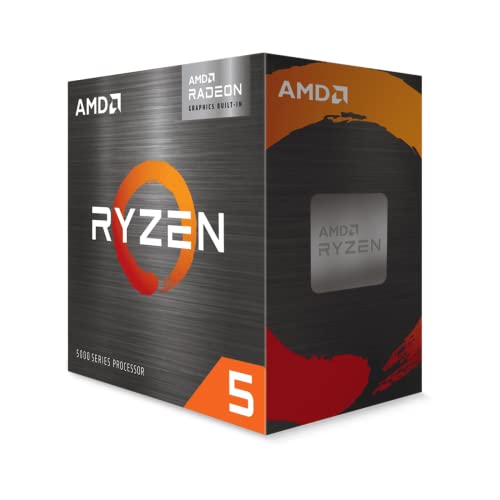 AMD Ryzen™ 5 5600G 6-Core 12-Thread Desktop Processor1.6 x 1.6 x 0.2 inches0.9 poundsCheck on Amazon


Top 3 picks at a glance
Quick Verdict: Who the Ryzen 5 2400G Suits and Who Should Skip It
The AMD Ryzen 5 2400G (sometimes searched as “Ryzen 2400G”, “R5 2400G” or “2400G”) was one of the first desktop chips to put a real gaming-class integrated GPU next to Zen CPU cores. Per AMD’s spec sheet and the major hardware databases, it is a 4-core, 8-thread part with 11 Vega compute units. It was a genuine value pick when it launched on February 12, 2018. Today it is mostly sold as leftover, used or OEM stock.
- Suits you if: you already own an AM4 board, want a cheap secondary PC, a media box, a kids’ starter gaming PC, or a stop-gap build while you save for a graphics card.
- Skip it if: you want modern AAA games at 1080p medium or higher, you plan to stream while gaming, or you are building a fresh system and can afford a six-core chip.
Ryzen 5 2400G Specs
The table below lists the figures reported by AMD and the major spec databases. Items we could not confirm are marked as such rather than guessed.
| Spec | Ryzen 5 2400G |
|---|---|
| Codename / architecture | Raven Ridge, first-generation Zen |
| Cores / threads | 4 / 8 |
| Base / max boost clock | 3.6 GHz / 3.9 GHz |
| L2 / L3 cache | 2 MB / 4 MB |
| TDP | 65 W |
| Socket | AM4 |
| Process | 14 nm |
| Memory | DDR4 only, officially up to 2933 MT/s |
| Integrated graphics | Radeon RX Vega 11: 11 compute units, 704 shaders, up to 1.25 GHz |
| Multiplier | Unlocked |
| Release date | February 12, 2018 |
| Cooler in box (retail) | Wraith Stealth on the boxed version |
There is also a “Ryzen 5 PRO 2400G” aimed at business desktops. It shares the same core design, so the gaming conclusions here carry over, though PRO parts are usually sold inside OEM systems rather than as retail boxes.
Gaming Performance: What to Expect From Vega 11
The 2400G’s pitch was always the graphics, not the CPU. With 704 shaders at up to 1.25 GHz, Vega 11 delivers roughly 1.76 TFLOPS of FP32 compute according to cpu-monkey’s calculation. That is far ahead of older integrated graphics, but well below even an entry-level discrete card from the last few years.
The ranges below are approximate and typical of what published reviews and user reports show. They vary a lot with game version, driver, resolution scaling and especially memory speed and channel count.
| Game type | Setting | Approximate result |
|---|---|---|
| Esports (CS2-class, Valorant-class, League-class) | 720p to 1080p low | Often playable, roughly 45 to 100+ fps depending on title |
| Older AAA (2015 to 2018 era) | 1080p low | Often 30 to 50 fps |
| Fortnite-class battle royale | 720p to 900p low, reduced scaling | Borderline, roughly 30 to 45 fps |
| Recent AAA (2023 onward) | 720p low with upscaling | Often under 30 fps or unstable; many titles are not realistic |
| Indie, retro, MOBA, strategy | 1080p medium | Generally comfortable at 60 fps |
720p versus 1080p on the 2400G
Vega 11 is happiest at 720p or 900p with low settings. At 1080p you must lower textures, shadows and effects, and many players rely on a render-scale slider instead. FidelityFX Super Resolution style upscalers help in games that support them, but the quality drop at such low internal resolutions is obvious.
Memory is the real performance knob
An APU shares system RAM with the graphics. A single stick of slow DDR4 can cut integrated graphics performance dramatically compared with two matched sticks in dual-channel mode. AMD lists DDR4-2933 as the official ceiling for this chip, and many boards run faster kits with XMP. As a rule of thumb, use two identical modules (for example 2×8 GB) and a kit rated at 3000 to 3200 MT/s if your board allows it.
Worked example: dual-channel DDR4-3200 provides 2 channels x 64 bits x 3200 MT/s / 8 = 51.2 GB/s of peak bandwidth. A single stick of DDR4-2400 gives 1 x 64 x 2400 / 8 = 19.2 GB/s. That is more than a 2.5x gap in the resource Vega 11 depends on most, which is why a one-stick 2400G build feels much slower than the same chip in dual channel.
Gaming with a discrete GPU
The 2400G has only four cores, a small 4 MB L3 cache and the first-generation Zen design. Paired with an entry-level graphics card it works fine in many older and esports games, but it will bottleneck stronger cards in modern titles that want six or more cores. Its graphics link is also narrower than on full desktop Ryzen chips (the APU provides fewer PCIe lanes to the GPU slot), which is another reason to treat it as a stop-gap rather than a long-term base.
Productivity and Everyday Use
Four cores and eight threads still handle web browsing, office work, streaming video and light photo editing comfortably. Video encoding and large compiles will feel slow next to any six-core chip released since. If you stream your gameplay with software encoding, the 2400G will struggle because the game and the encoder fight for the same four cores.
Platform Notes: Socket AM4, Chipsets, BIOS and Cooler
- Socket and boards: The chip uses AM4. First-generation APUs work out of the box on most A320, B350 and X370 boards with a BIOS that supports Raven Ridge, and with B450 and X470 boards. Check the board’s CPU support list before buying.
- B550 and newer: Newer AM4 boards are designed around third-generation and later Ryzen. Do not assume a 2000-series APU is supported on them; confirm on the manufacturer’s CPU list.
- BIOS updates: Older boards may need an update to boot newer chips, but the 2400G itself is old enough that almost any B450-era board with its shipping BIOS recognizes it. If you plan to upgrade later to a Ryzen 5000 chip, update the BIOS first while the old chip is still installed.
- Cooler: The retail box includes AMD’s Wraith Stealth cooler, which is adequate at stock settings. OEM or used chips often arrive without a cooler, so budget for a basic aftermarket model.
- Upgrade path: AM4 is a strength here. You can later move to a Ryzen 5 5600, Ryzen 5 5600G or Ryzen 7 5700X on a compatible board without changing RAM or the cooler mount, which is the best reason to buy into this platform.
Why four cores matter more each year
Modern game engines spread work across many threads: physics, asset streaming, audio and background services all want their own share. A four-core, eight-thread design from 2018 has little headroom once the game, the launcher, voice chat and a browser tab are all open. That is why even lightly threaded esports games may show fps drops during busy scenes, and why recent open-world titles can hitch on this chip regardless of the graphics settings you choose.
Power and Thermals
The 65 W TDP is modest. The 2400G runs cool on its stock cooler in most cases and is quiet in a small case. Because the integrated GPU shares the same package, heavy gaming loads add heat to the same die, so fan curves will ramp up compared with a CPU-only workload. Overclocking the unlocked multiplier is possible, but gains are small and memory speed usually matters more for gaming.
Ryzen 5 2400G Alternatives
These alternatives are widely available and fit AM4. Specs for the Ryzen 5 5600G and 3400G come from the manufacturer’s listings and the databases cited below.
| Chip | Cores / threads | Integrated graphics | Best for |
|---|---|---|---|
| Ryzen 3 2200G | 4 / 4 | Vega 8 (512 shaders) | Cheapest legacy build; weaker than the 2400G |
| Ryzen 5 3400G | 4 / 8 | Vega 11, up to 1.4 GHz | Small upgrade from the 2400G if you find it cheap |
| Ryzen 5 5600G | 6 / 12 | Vega 7 (448 shaders), up to 1.9 GHz | Best AM4 APU for a no-GPU gaming build |
| Ryzen 5 5600 | 6 / 12 | None | Best AM4 value if you will add a graphics card |
Interesting detail: despite having fewer compute units, the 5600G’s graphics are reported to be about 12 to 13 percent faster in games than the 3400G’s Vega 11, thanks to higher clocks and architectural improvements, according to nanoreview’s comparison. For a deeper look at how the Vega variants differ, see our explainer on Vega 8 versus Vega 11 graphics.
Is the Ryzen 5 2400G Still Worth Buying in 2026?
Only in narrow situations. If you already own an AM4 board and RAM, or you find a working 2400G for very little money, it is a fun way to build a low-cost 720p to 1080p low gaming machine. If you are buying parts fresh, the six-core Ryzen 5 5600G typically costs only a modest step up and is far better for games, multitasking and future upgrades. Treat the 2400G as a legacy chip.
Buying Options: New, Boxed, Used and OEM
- Boxed retail: The best option when available because it includes the cooler and warranty paperwork.
- Used: Common and cheap. Ask for clear photos of the pins and the chip’s top, and confirm it was removed from a working system. Avoid listings with bent-pin hints.
- OEM or loose chips: Usually no cooler, short or no seller warranty, and sometimes unclear provenance. Budget for a cooler and extra thermal paste.
- PRO versions: Fine for gaming, but they usually come from business PCs, so ask the seller for the exact model and confirm it works in a standard retail AM4 board.
Which 2400G Setup Fits Your Situation
Use this decision matrix to match your situation to a sensible plan. The logic is simple: the 2400G is only a good buy when the surrounding parts are already paid for or very cheap.
| Your situation | Best move | Why |
|---|---|---|
| Own an AM4 board and two sticks of DDR4 | Use a 2400G now, upgrade to a 5600 later | Lowest cost; the socket carries over to six-core chips |
| Building fresh, no graphics card yet | Buy a Ryzen 5 5600G instead | Six cores and faster graphics for a small step up in cost |
| Building fresh, will add a GPU within months | Buy a Ryzen 5 5600 and run it with a graphics card | No wasted integrated graphics and stronger CPU for games |
| Need a quiet home or office PC that can game casually | 2400G is fine | Low power, modest heat, adequate for light play |
| Want modern AAA at 1080p medium | Skip the 2400G entirely | Integrated Vega 11 and four cores fall short |
Common Problems and Fixes
- Games run at very low fps despite decent specs: Check that memory is in dual channel (sticks in the slots your manual recommends) and that XMP is enabled. This is the most frequent cause on APU builds.
- Display output is dead: Plug the monitor into the motherboard’s video port, not into a graphics card slot that has no card. Boards without video outputs cannot use the integrated GPU at all.
- Board will not boot with the chip: An old BIOS may not recognize Raven Ridge on the earliest AM4 boards. Look for a “Ready for Ryzen with Radeon graphics” style note or update the BIOS using a different compatible chip.
- Stutter in newer games: Lower texture quality first, since the integrated GPU borrows system memory, then reduce shadows and effects. If stutter persists, the game has simply outgrown the hardware.
- Adding a graphics card later: In the BIOS, the integrated GPU can be disabled or set to auto. With a discrete card installed, plug the monitor into the card, and keep system memory in dual channel because the CPU still benefits.
Suggested Parts for a 2400G Build
The items below are matched to the platform: an AM4 board that officially supports first-generation APUs, dual-channel memory, and an upgrade chip if you want to leave the 2400G behind.
AMD Ryzen 5 2400G with Radeon RX Vega 11 Graphics
The boxed retail version of the chip discussed in this review. It pairs four Zen cores with Vega 11 graphics on one AM4 package and ships with the Wraith Stealth cooler. It suits a small budget PC for esports titles, older games and everyday use. Remember that availability depends on remaining stock, so verify that you receive the exact chip and not a different APU. Pick it only if you will run dual-channel memory.
As an Amazon Associate we earn from qualifying purchases at no extra cost to you.
AMD Ryzen 5 5600G 6-Core Desktop Processor with Radeon Graphics
The natural upgrade or alternative to the 2400G on the same socket. It moves to six cores and twelve threads with Vega graphics at higher clocks, which brings noticeably better frame pacing in games and a much better multitasking experience. It is the better pick for a fresh build with no graphics card. It still leaves room to add a discrete GPU later without replacing the processor.
AMD Ryzen 5 5600 6-Core Desktop Processor with Wraith Stealth Cooler
Choose this one if you plan to add a graphics card from day one. It has no integrated graphics, but it offers six fast Zen 3 cores and a bundled cooler, making it a strong, budget-friendly gaming CPU for an AM4 board. Check that your board has a BIOS that supports Ryzen 5000 chips before purchase. For a 2400G owner, this is a clean drop-in upgrade path.

MACHINIST B450 Motherboard for AMD AM4 Ryzen Processors
A B450-class AM4 board whose listing states support for Ryzen 1st to 5th generation chips, which is the compatibility window you need for a 2000-series APU and a later 5000-series upgrade. It offers DDR4 slots, M.2 NVMe and SATA storage support. It is a budget board from a lesser-known brand, so confirm HDMI or DisplayPort output on the model you pick because you will be using the APU’s graphics.
G.SKILL Ripjaws V Series DDR4 16GB (2x8GB) Desktop Memory
A dual-channel kit rated up to 3200 MT/s with XMP, which is exactly what an APU build needs. Two matched sticks give Vega 11 the memory bandwidth it depends on, as shown in the worked example above. Select this over a single 16 GB stick if gaming on integrated graphics is the goal. Enable XMP in the BIOS, and drop to 3000 or 2933 MT/s if your board is unstable at the rated speed.

Frequently Asked Questions
Can the Ryzen 5 2400G run games without a graphics card?
Yes, for esports, indie and older titles at 720p to 1080p low settings. Modern AAA games are generally not realistic. Use dual-channel memory to get the most from the integrated Vega 11 graphics.
Is the Ryzen 5 2400G good for gaming in 2026?
It is acceptable for light gaming on a minimal budget, but it is outdated. Four cores and first-generation Zen limit newer games, and a Ryzen 5 5600G is a far better starting point for new builds.
What is the difference between Ryzen 5 2400G and Ryzen 5 PRO 2400G?
The PRO version is the business-oriented sibling with the same core design and Vega 11 graphics, plus extra management and security features. Gaming performance is essentially the same. PRO chips are more often found in OEM systems.
Does the Ryzen 5 2400G come with a cooler?
The retail boxed version includes a Wraith Stealth cooler. Loose, OEM or used chips often do not, so check the listing and plan to buy a basic cooler if needed.
Which motherboards support the Ryzen 5 2400G?
Most AM4 boards from the A320, B350, X370, B450 and X470 families do, sometimes after a BIOS update. Newer 500-series boards are built around later Ryzen generations, so check the board maker’s CPU list before buying.
Can I upgrade from a 2400G later?
Yes, on the same AM4 board if its BIOS supports the new chip. A Ryzen 5 5600 or 5600G is the common upgrade. Update the BIOS first, while the 2400G is still installed.
Is Vega 11 better than Vega 8?
Yes. Vega 11 has 704 shaders against 512 on Vega 8, which translates to a gain of roughly a third in graphics workloads according to published comparisons.
Sources
- AMD product specifications for the Ryzen 5 2400G
- CPU-World and cpu-monkey processor databases
- TechRadar launch review of the Ryzen 5 2400G
- NanoReview graphics comparisons
Last updated: October 2026
Related guides
More from Amazon
Programs that pair well with the guide above. Offers and eligibility are set by Amazon and may change.
Free shipping on eligible items, Prime Video and more. Eligible new members can start with a free trial.
Start a Prime free trialAd-free music streaming. Eligible new subscribers can start with a free trial.
Try Music Unlimited freeA Prime membership for ages 18-24 with a trial period. Eligibility is set by Amazon.
See Prime for Young AdultsAudiobooks and podcasts to listen to on the go. Eligible new members can start with a free trial.
Try Audible freeAs an Amazon Associate we earn from qualifying purchases.