
Building a home gaming nook or refining a dedicated work-from-home setup requires striking a careful balance between aesthetics, room thermals, and raw computing value. When planning a budget-conscious desktop tower that fits neatly into your living space, every dollar counts. One of the most common hardware dilemmas buyers face is memory configuration: picking single channel vs dual channel ram for budget gaming setups. Should you buy a single 8GB or 16GB stick of memory to leave your motherboard open for cheap future upgrades, or should you buy two smaller sticks right away to run in dual-channel mode?
While a computer memory module looks small compared to your desk surface or desktop case, its configuration dictates how smoothly your system runs under heavy loads. Just as maintaining proper airflow in a home office requires thoughtful structural choices—much like installing a high-quality vent system like the Fittes Framed 6×10″ ABS Wall/Ceiling Vent with Single Channel, White-6pk ($251)—your PC’s internal layout requires proper data pathways to keep hardware cool and responsive. Understanding how memory channels function in a home gaming environment will save you money, eliminate annoying screen micro-stutters, and ensure your desktop remains whisper-quiet during long evening gaming sessions.
As an Amazon Associate we earn from qualifying purchases at no extra cost to you. Product prices and availability are accurate as of the date shown and are subject to change.


Top 3 picks at a glance
Quick Verdict
For budget gaming in a modern home setup, dual channel RAM is the clear winner. Running two memory sticks in dual-channel mode doubles the data transfer bandwidth between your processor and memory (moving from a 64-bit bus to a 128-bit bus). This performance gain eliminates dramatic frame-rate dips and micro-stutters in modern games without increasing your desktop’s heat output or desk footprint. Single-channel RAM is only recommended as a brief, temporary compromise if you are operating on an absolute shoestring budget with a strict plan to purchase a matching second stick within a few months.
Side by Side
| Feature / Criterion | Single Channel RAM | Dual Channel RAM |
|---|---|---|
| Comfort (System Smoothness) | Prone to micro-stutters, slower loading, frame rate dips during heavy background tasks. | Butter-smooth frame pacing, rapid task switching, consistent 1% low frame rates. |
| Durability & Thermals | Generates ~2 to 4 Watts per stick; minimal thermal load inside compact PC cases. | Generates ~4 to 8 Watts combined; minimal thermal impact, evenly spread heat output. |
| Price Range | $20 – $45 for single 8GB/16GB DDR4 or DDR5 budget modules. | $40 – $90 for budget 2x8GB or 2x16GB kits; higher-end desktop kits can reach higher pricing. |
| Maintenance & Upgrading | Leaves open DIMM slots on 2-slot budget motherboards for painless future drop-ins. | Fills 2 slots immediately; future upgrades on 2-slot motherboards require replacing both sticks. |
| Space Needed | Requires 1 active DIMM slot (~133.35mm length stick). | Requires 2 active DIMM slots spaced across memory channels. |
| Look & Desk Aesthetics | Asymmetrical look inside glass-paneled desktop cases; single stick looks empty. | Balanced, symmetrical visual appeal inside modern home office desktop cases. |
| Resale Value | Lower demand on second-hand home tech markets as standalone low-capacity sticks. | High demand; pre-matched kit pairs retain strong value for budget builders. |
| Best For | Ultra-low budget starter builds, basic office work, temporary phased upgrades. | Budget gaming, home office multitasking, smooth frame rates, APU/Integrated graphics setups. |
Where Single Channel Wins
Single channel memory configuration relies on a single 64-bit memory bus connection to the central processing unit (CPU). While it falls behind in raw gaming speed, it maintains a few practical advantages for specific home office budget constraints:
- Lower Upfront Cash Output: When building a desktop setup on an ultra-tight budget, purchasing a single 8GB or 16GB RAM module allows you to allocate an extra $20 to $35 directly toward a better central processor, extra storage space, or a higher-quality power supply.
- Simplified Upgrade Path on 2-Slot Motherboards: Budget micro-ATX motherboards frequently feature only two total physical RAM slots (DIMM slots). If you fill both slots immediately with a cheap 2x4GB kit, expanding your memory later requires removing both modules and discarding them. Installing a single 8GB or 16GB stick leaves one physical slot open for a second identical module down the line.
- Minimal Physical Footprint: In ultra-compact mini-ITX desktop builds where CPU cooler clearance is restricted to fractions of an inch, populating only one channel simplifies wire routing and clearance near oversized CPU heatsinks. Just as specialty precision equipment like an ONiLAB Single Channel Adjustable Pipettor, Micropipette 100-1000μL ($28.99) fulfills a targeted, singular role in a home laboratory workstation, a single memory module fits ultra-minimalist desktop hardware layouts where spatial clearance is extremely tight.
Where Dual Channel Ram for Budget Gaming Wins
Dual channel memory operates across two independent 64-bit data paths, creating a 128-bit wide highway to the processor. For home gaming and daily multi-app workflows, dual channel RAM delivers overwhelming practical advantages:
- Massive Bandwidth Expansion: Running memory in dual channel doubles theoretical data throughput. For instance, standard DDR4 memory running at 3200MHz in single channel provides roughly 25.6 GB/s of bandwidth, whereas dual channel doubles this to approximately 51.2 GB/s.
- Elimination of Frame Drops (1% Lows): While single channel RAM might deliver acceptable *average* frame rates in simple games, dual channel drastically improves *minimum* frame rates (1% and 0.1% lows). This prevents sudden screen freezing or jarring micro-stutters when fast action, explosions, or large open-world maps render on screen.
- Essential Boost for Integrated Graphics (APUs): If your budget gaming PC lacks a dedicated graphics card and relies on integrated CPU graphics (such as AMD Radeon Vega or Intel Iris Xe), system memory acts directly as video memory (VRAM). Running single channel RAM on an integrated GPU cuts graphical performance by up to 40-50%, whereas dual channel restores smooth 1080p playable frame rates.
- Enhanced Home Multitasking: Dual channel memory keeps your home computer responsive when you have a modern game running alongside Discord audio chat, web browser tabs with music streams, and background smart-home control applications. High-capacity kits like the CORSAIR Vengeance LPX DDR4 RAM 32GB (2x16GB) Up to 3200MHz CL16-20-20-38 1.35V Intel XMP AMD EXPO Computer Memory – Black (CMK32GX4M2E3200C16) ($249.99) demonstrate how low-profile dual-channel designs deliver high stability under intensive multitasking without physically blocking large desktop CPU air coolers.
Cost Over 5 Years
Evaluating the true cost of PC components over a standard 5-year home ownership cycle involves examining energy consumption, productivity losses, and resale value. Memory modules operate at very modest operating voltages—typically 1.2V to 1.35V for DDR4 and 1.1V to 1.4V for modern DDR5 kits. A single RAM module draws around 2 to 3.5 Watts under load, meaning a dual-channel kit draws roughly 4 to 7 Watts total. Operating a dual-channel setup for 4 hours of daily gaming adds less than $0.50 to $1.00 per year to your home electric bill based on standard U.S. electricity rates ($0.15 per kWh).
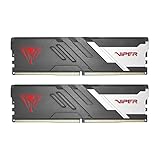
The real economic metric is upgrade longevity. A single 8GB module bought today will struggle to run modern home entertainment titles smoothly. Upgrading mid-way through your system’s life cycle adds extra shipping costs, potential component incompatibility, and lost productivity from system troubleshooting. By contrast, investing directly in a matched 2x8GB or 2x16GB dual-channel configuration guarantees optimal CPU throughput straight out of the box. Looking forward through 2026, dual-channel setups featuring modern platforms—such as high-speed DDR5 options like the Patriot Viper Venom DDR5 RAM 32GB (2X16GB) 6000MHz CL30 Desktop Memory ($479.99)—offer exceptional long-term utility, holding significant secondary market trade value compared to isolated single-channel sticks.
Which One for Your Home
Small Apartment Desk Setup
In a tight apartment workspace where your gaming desk doubles as your daily office desk, thermal efficiency and low fan noise are paramount. Desktop fans ramp up when processors choke while waiting for memory data delivery. Dual-channel memory allows your CPU to operate at maximum efficiency, completing instructions faster and allowing cooling fans to idle down quietly. Choose a budget 2x8GB DDR4 or DDR5 dual-channel kit to maintain a calm, quiet, thermal-efficient home apartment work environment.
Family with Kids/Pets
A shared family computer endures unpredictable multitasking workloads: kids launching fast-paced online multiplayer games while parents stream media or edit home videos in background windows. Single channel memory quickly bottlenecks under these heavy mixed loads, resulting in annoying app lag and frozen screens. A dual-channel memory kit prevents system lockups, ensuring smooth frame rates and responsive software regardless of who is using the family desk computer.
Rental Property Office
If you live in a rental property with limited freedom to modify room power routing or built-in workspace furniture, you want a reliable, plug-and-play desktop tower that requires zero hardware maintenance. Single channel RAM setups are notorious for creating mysterious micro-stutters that lead renters to assume their entire system is failing or overheating. Installing matched dual-channel RAM ensures seamless stability out of the box without requiring manual BIOS tweaking or ongoing hardware troubleshooting.
Long-Term Home Office
If you are designing an integrated, long-term home office gaming space meant to last 5+ years without overhaul, dual-channel memory is non-negotiable. Pair a dual-channel 16GB or 32GB memory kit with a high-efficiency CPU cooler. This ensures your home tower handles future software OS updates, heavy productivity suites, and demanding next-generation games effortlessly without requiring early component replacement.
FAQ
Can I add a second matching stick later to convert single channel to dual channel?
Yes. If you buy a single 8GB or 16GB module now, you can buy an identical stick later and place it into the matching DIMM slot on your motherboard to enable dual-channel bandwidth. However, to guarantee total stability and automatic XMP/EXPO speed profiles, it is best to purchase matched modules tested together by the manufacturer in a single kit.
Does dual channel RAM draw significantly more power or generate more desk heat?
No. Adding a second RAM module increases total system power draw by only about 2 to 4 Watts. This negligible difference will not affect your home office electricity bills, nor will it noticeably increase ambient room temperatures or internal PC case thermals.
Why does single channel RAM cause frame drops in budget gaming PCs?
When a game engine renders complex 3D environments, the CPU constantly fetches game assets, physics data, and player locations from RAM. Single-channel RAM acts like a narrow single-lane bridge. When data traffic surges during heavy in-game action, the CPU must pause and wait for data to transmit, resulting in sudden frame drops and screen stuttering.
Is DDR5 single channel the same as DDR4 single channel?
Not quite. A single physical DDR5 RAM stick features two independent 32-bit sub-channels on a single module, whereas a single DDR4 stick features one 64-bit channel. However, running two physical DDR5 modules across your motherboard’s two memory channels (providing four 32-bit sub-channels total) still provides substantially higher real-world bandwidth and lower latency than running a single DDR5 module.


