
Top 3 picks at a glance
The Short Answer
Most mid-tower and full-tower PC cases accept CPU air coolers between 155mm and 170mm tall, so a cooler with roughly 160mm of clearance headroom is the safe target for a typical build. Small form factor cases often cap out at 70mm or less, which pushes you toward low-profile coolers, while some full-towers handle coolers up to 190mm. The practical rule: check your case’s published maximum CPU cooler height, then buy a cooler at least 5mm shorter than that number to leave room for mounting tolerances and airflow.
CPU cooler clearance is the vertical space between the top of your CPU (seated on the motherboard) and the side panel of your case. Exceed it, and the side panel simply will not close — or worse, it presses against the fan and stalls it. RAM clearance and case width matter too, which we will cover below.
As an Amazon Associate we earn from qualifying purchases at no extra cost to you. Product prices and availability are accurate as of the date shown and are subject to change.


Standard Sizes
Air coolers fall into a few well-defined height classes. Here is how the most common categories compare:
| Cooler Class | Typical Height | Typical TDP Rating | Best For | Typical Price Range |
|---|---|---|---|---|
| Stock / slim cooler | 2.6–2.8 in (66–70 mm) | 65–95W | HTPCs, office builds, non-overclocked CPUs | $8–$20 |
| Compact tower (92mm fan) | 4.9–5.5 in (125–140 mm) | 100–150W | SFF cases with ~140mm clearance, budget gaming builds | $12–$25 |
| Single 120mm tower | 5.9–6.3 in (150–160 mm) | 150–180W | Most mid-tower builds, mid-range CPUs | $17–$35 |
| Dual 120mm tower | 6.1–6.3 in (155–160 mm) | 180–265W | Hot CPUs, overclocking, quiet high-performance builds | $35–$60 |
| Large dual-tower / 140mm class | 6.5–6.7 in (165–170 mm) | 220–280W+ | Full-tower cases, flagship CPUs | $40–$100 |
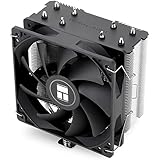
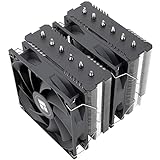
For concrete reference points from real products: the AMD Wraith Stealth stock cooler stands about 2.6 inches (67mm) tall and suits 65W-class chips. The Thermalright Assassin X120 Refined SE measures roughly 6.1 inches (155mm) tall and comfortably cools 150W-class CPUs. The ID-COOLING SE-903-XT V2 comes in around 4.9 inches (125mm), making it a smart pick when your case tops out near 135–140mm. The Thermalright Peerless Assassin 120 SE, a dual-tower design, sits at about 6.1 inches (155mm) and is rated for up to roughly 245W of heat output — yet it still fits the same 155mm clearance as many single-tower coolers.
Also weigh the cooler itself: compact models run 13–17 ounces (370–480g), while large dual towers can exceed 35 ounces (1,000g). Anything over about 2 pounds (900g) benefits from the motherboard standing vertically during installation to reduce socket stress.
How to Measure Your Space
- Find your case’s official spec. Look on the manufacturer’s product page or in the manual for “CPU cooler max height.” This is the single most important number. Mid-towers commonly list 160–170mm; compact cases list 70–140mm.
- Subtract 5mm for safety. If your case allows 160mm, shop for coolers 155mm and under. Mounting hardware, slightly bowed motherboard trays, and panel tolerances all eat into the published figure.
- Verify the side panel gap physically if modifying. Measuring from the CPU socket center to the side panel with a ruler gives you a real-world check. The clearance limit is measured from the CPU’s top surface, not the socket.
- Check RAM clearance. Tower coolers with fans overhanging the RAM slots need memory 1.2–1.5 inches (31–40mm) tall unless the fan can be raised. The Peerless Assassin 120 SE, for example, requires either low-profile RAM under its front fan or a raised fan that adds height.
- Confirm socket compatibility. Modern AMD AM4/AM5 and Intel LGA 1150/1151/1155/1200/1700/1851 sockets each use different mounting hardware; verify the cooler ships with the bracket for yours.
- Measure case width for downdraft coolers. If you are using a low-profile top-blow cooler like the Wraith Stealth, ensure the case has at least 2.9 inches (74mm) of width above the motherboard so the fan can breathe.
By Room or Use Case
Small Form Factor and HTPC Builds
SFF cases frequently restrict coolers to 70mm or less. The AMD Wraith Stealth, at roughly 2.6 inches (67mm) tall, is one of the few coolers that slips into these builds, and at around $10 it costs less than most aftermarket options. Pair it with a 65W CPU such as a Ryzen 5 non-X chip. For slightly roomier SFF cases with 125–140mm of clearance, the ID-COOLING SE-903-XT V2 (about 4.9 inches / 125mm, 3 heat pipes, rated to 150W) gives a major upgrade in acoustics and thermals for around $14.
Budget Mid-Tower Gaming Builds
If your case lists 155mm or more of cooler clearance, the single best value segment is the single 120mm tower. The Thermalright Assassin X120 Refined SE, at $17.90, brings four heat pipes, a 120mm PWM fan, and roughly 155mm of height — enough to keep a 150W-class CPU quiet under load. It fits LGA 1150/1151/1155/1200/1700/1851 and AM4/AM5 boards.
High-Performance and Overclocked Builds
Dust-producing, sustained all-core workloads — video rendering, simulation, competitive gaming with a hot 200W+ chip — reward a dual-tower cooler. The Thermalright Peerless Assassin 120 SE ($34.90) uses six AGHP heat pipes and twin 120mm PWM fans at up to 1,550 RPM to handle roughly 245W while staying under 35 dBA in normal operation. At about 6.1 inches (155mm) tall, it fits the same cases as single-tower coolers, but confirm your RAM is under 1.6 inches (42mm) tall or plan to raise the front fan.
Quiet Home Office and Studio PCs
Noise-sensitive rooms benefit from large coolers running fans at low RPM. A dual-tower cooler spinning a 120mm fan at 800–1,000 RPM is nearly inaudible. The extra height (155mm+) requires a standard mid-tower or larger, so plan the case around the cooler rather than the reverse.
Living Room and Media Consoles
Console-style cases with horizontal motherboards often cap cooler height at 50–70mm and rely on limited airflow. Stick to stock-class slim coolers like the Wraith Stealth, keep the CPU at 65W, and prioritize a case with mesh ventilation, since these enclosures run several degrees warmer than towers.
Common Sizing Mistakes
- Ignoring the case spec entirely. The most common failure: buying a 160mm cooler for a case rated at 155mm. Always work backward from the case’s published limit.
- Forgetting RAM height. Fans that overhang the DIMM slots collide with tall RGB memory modules. Low-profile sticks (under 1.4 inches / 36mm) or a raised fan solve it.
- Undersizing the cooler for the CPU. A 65W-class slim cooler on a 180W chip will thermal throttle under load regardless of how well it fits.
- Assuming all “120mm” coolers are the same height. Heights vary from 150mm to 160mm within the same fan class — always check the millimeter figure, not the fan size.
- Neglecting motherboard VRM and M.2 clearance. Some compact coolers overhang the top M.2 slot or the VRM heatsinks on smaller ITX boards.
- Buying for a socket you do not have. AM5 and LGA 1700 use different standoff positions than AM4 and LGA 1200; confirm the included mounting kit list before checkout.
FAQ
Will a 160mm cooler fit in my case?
Only if your case lists at least 165mm of CPU cooler clearance. A 160mm cooler in a 160mm-rated case leaves zero margin for mounting tolerance and side panel bowing, so it frequently fails to close.
What happens if my CPU cooler is too tall?
The side panel will not close, or it will press against the fan, causing bearing noise, reduced airflow, or a stalled fan that leads to overheating. There is no workaround short of a smaller cooler or a bigger case.
How much cooler clearance do I need for overclocking?
Plan on a cooler rated for at least 30–40% above your CPU’s stock power draw, which usually means a 155mm+ dual-tower design in the 220–265W class. Check your case supports at least 160mm to be safe.
Are stock coolers good enough?
For 65W CPUs in well-ventilated cases, a slim stock cooler like the Wraith Stealth is adequate, though fans run louder under load. For 105W+ chips, a $14–$35 tower cooler such as the ID-COOLING SE-903-XT V2 or Thermalright Assassin X120 Refined SE drops temperatures noticeably and costs little.


