
Building a first gaming PC for a child is a different value calculation from building your own. The most-played titles at this age — blocky sandbox games, cartoon battle royales, platformers and browser-style games — are famously light on hardware. That means you can put together a machine that runs everything a young gamer wants for a modest budget, and spend the savings on the parts that actually protect your investment: reliability and room to grow into heavier games later.
Top 3 picks at a glance
The games are lighter than you think
The most popular titles for younger players are designed to run on almost anything, including school laptops and older family computers. A modern budget CPU with integrated graphics or a very entry-level dedicated card will drive them at smooth frame rates on a 1080p monitor. There is genuinely no need for a mid-range or high-end GPU here, and buying one is money spent on performance the games will never request. Parents routinely overspend on a child’s first PC because the marketing implies more is safer — it usually is not.
As an Amazon Associate we earn from qualifying purchases at no extra cost to you. Product prices and availability are accurate as of the date shown and are subject to change.
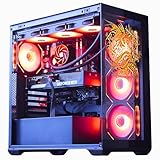


A durable, right-sized first build
| Component | Kid-friendly target | Rough cost |
|---|---|---|
| CPU/APU | Modern budget chip, integrated or entry GPU | $150–250 |
| RAM | 16GB | $40–60 |
| Storage | 500GB–1TB NVMe SSD | $40–70 |
| PSU | 450–550W 80+ Bronze/Gold | $50–70 |
| Case | Simple airflow micro-ATX | $50–70 |
Spend on longevity, not flash
The smartest money here goes toward reliability and headroom rather than raw speed. A quality power supply and 16GB of RAM cost little and mean the machine stays stable and can accept a real GPU later, when your child’s tastes grow into heavier titles. A refurbished prebuilt with a warranty is also an excellent option, taking the assembly worry off your plate for a similar or lower price while still leaving room to upgrade.
Plan for the upgrade you will eventually make
Kids grow into more demanding games. Choosing a case and power supply with a little headroom — a 550W unit and a case that fits a full-size graphics card — means the day your child wants to play something heavier, you drop in a $150–250 GPU rather than replacing the whole machine. That upgrade path is the single best value decision you can make on a first build, turning one purchase into a platform that lasts through several phases of their gaming life.
Teach value along the way
There is a bonus return on a modest first build: it becomes a teaching tool. A child who watches a GPU get added, or helps clean dust from the case, learns that a PC is upgradeable and worth maintaining rather than disposable. That mindset saves real money over their gaming life, and it starts with a first machine that was clearly built to be improved rather than replaced.
FAQ
Do kids’ games need a good graphics card?
Most do not. The popular sandbox and battle-royale titles for younger players run smoothly on integrated or entry-level graphics at 1080p. You can skip a mid-range GPU entirely and add one later only if their games get heavier, which keeps the initial cost low.
Should I build or buy a refurbished PC for my child?
Both work. A refurbished prebuilt with a warranty removes assembly hassle at a fair price, while building lets you pick a power supply and case with upgrade headroom. Either way, prioritise reliability and a clear upgrade path over raw performance you will not use.
Bottom line: A child’s first gaming PC is a place to spend modestly and wisely. Target a $400–600 build (or a warrantied refurbished prebuilt), keep 16GB of RAM and a power supply with headroom, and skip the expensive GPU until their games demand it. You get a stable machine that grows with them — the best kind of value.


