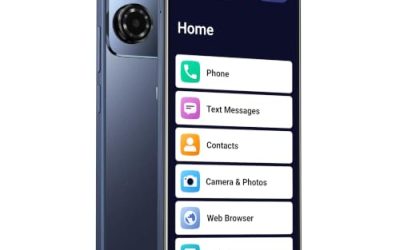
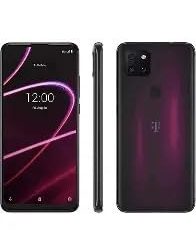
A phone budget of under 150 dollars forces real trade-offs, and the market tries to hide them with big numbers. Listings brag about 20GB of “RAM” that is mostly virtual, 2TB of “expandable” storage, and camera megapixel counts that say little about photo quality. The useful question is simpler: which of these unlocked Android phones gives you a screen you can read, a battery that gets through a day, enough storage for your apps, and a software version that will not feel abandoned in a year? This guide reads each title for those facts and nothing more.
Who is this for? Anyone buying a first smartphone for a teenager, a backup phone for the glovebox, a work-free personal line, or a replacement for a cracked screen where spending more makes no sense. The seven phones range from a 5-inch compact with a removable battery to a 6.8-inch 5G model with a 120Hz display. In 2026, even budget Android has split into two camps: lightweight “Go” editions built for modest hardware, and slightly pricier models with real storage and faster screens. Knowing which camp you need saves frustration after the box is open.
Our Top Picks
 Rogue R67S Unlocked 4G LTE Smartphone for T-Mobile6.78 x 3.13 x 0.39 inches0.5 poundsCheck on Amazon


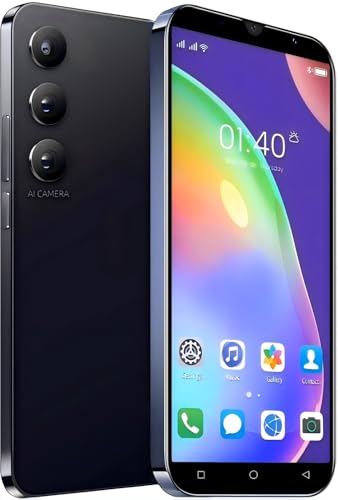

Top 3 picks at a glance
Quick Picks
As an Amazon Associate we earn from qualifying purchases at no extra cost to you.




| Product | Best for | Key spec from the title |
|---|---|---|
| Rogue R67S | Big-screen browsing and video | 6.8-inch HD+, Android 15 Go, 32GB storage |
| LUNAR Eclipse L1 | 5G on a short budget | 5G, 128GB, 5000mAh, 50MP camera, 18W charging |
| MIRO 4G Android 14 Go | Expandable storage and dual SIM | 2GB + 32GB, up to 256GB expandable, 3000mAh |
| Generic 5.8-inch Android 14 | Absolute lowest-cost backup phone | 2GB + 8GB, 2850mAh, dual SIM |
| Unnecto Bolt One | Small hands and a US warranty | 5.0-inch, 32GB, Android 14 Go, dual SIM |
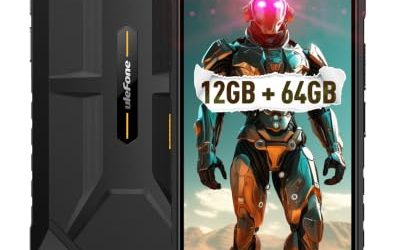
| Ulefone Note 22 | Compact phone with a swappable battery | 5-inch, Android 16 Go, removable 3000mAh |
| TCL 60 XE NXTPAPER 5G | Eye comfort and a smooth screen | 6.8-inch 120Hz, 8GB + 128GB, 5010mAh |
How to Choose
Real memory and storage, not headline totals
Ignore virtual RAM numbers. Memory borrowed from storage helps only a little, so judge by the physical figure in the title: 2GB is tight, 3GB is workable on a Go edition, and 8GB is genuinely comfortable. Storage matters just as much. Eight gigabytes disappears after Android and a handful of apps, 32GB is a minimum for daily use, and 128GB gives room for photos and offline music. A microSD slot listed as expandable is a useful safety valve, though it does not run apps as fast as built-in storage.
A simple rule of thumb: decide what you will install before you pick a phone. A banking app, a maps app, two messaging apps, and a streaming app together can claim several gigabytes, and system updates take their share too. Add photos, and a 32GB phone feels full within a few months. If you expect to keep the phone for two or three years, paying slightly more for 128GB is usually smarter than buying 32GB and fighting low-storage warnings. Likewise, a phone with 2GB of physical RAM will reload apps every time you switch between them, which feels slow even when the processor is fine.
Battery capacity and charging
Battery size is stated in milliamp-hours, and a screen size has to be considered alongside it. A 5000mAh battery behind a 6.8-inch screen is a solid day-plus phone; a 2000mAh cell in a 5-inch phone will need a midday top-up. Fast charging is rare at this level, so a listed 18W figure is worth noting. A removable battery, as on one model here, lets you carry a spare instead of hunting for an outlet.
Network compatibility and Android version
Unlocked does not always mean it works on every carrier. Look for named support for your network, such as AT&T, T-Mobile, or Cricket, and check whether the phone is 4G LTE or 5G. Go editions run lighter versions of Android that suit low memory. A newer Android number such as 15 or 16 usually promises longer app compatibility than Android 14, but the title cannot tell you how long security updates will last, so treat that as an open question.
Screen, camera, and what to ignore
HD+ resolution is fine for a phone at this level. A 120Hz refresh rate makes scrolling feel smoother and is a bonus rather than a requirement. Camera specs like 50MP describe sensor pixels, not photo quality, and a 5MP plus 2MP pairing means a basic camera for scanning and simple snapshots. Skip anything that stresses “AI” in a vague way unless it lists a function you will use. Budget phones most often cut corners on storage speed, camera processing, and update promises.
The 7 Best Options
Rogue R67S
The Rogue R67S pairs a 6.8-inch HD+ display with Android 15 Go, 3GB of RAM plus 3GB of extended memory, and 32GB of storage. It names T-Mobile and AT&T as supported networks. That makes it a straightforward choice for someone who wants a big screen for video, maps, and reading without paying for premium hardware.
- Strength: Large 6.8-inch screen suits video and large text.
- Strength: Android 15 Go is a recent software version for a phone in this tier.
- Trade-off: Only 32GB of storage and the “extended” memory is virtual, not extra physical RAM.
Skip it if you need a carrier other than T-Mobile or AT&T or a compact phone for one-handed use.
LUNAR Eclipse L1
This is the only 5G option aside from the TCL, and it adds 128GB of storage, a 6.79-inch screen, a 5000mAh battery, a 50MP camera, and 18W fast charging. Compatibility is listed for AT&T, T-Mobile, and Cricket, among others. It fits a buyer who wants more storage and a bigger battery without stepping up in tier.
- Strength: 128GB of storage gives breathing room for photos and apps.
- Strength: 5000mAh battery with 18W charging is strong for the category.
- Trade-off: Runs Android 14, and the title does not state the RAM amount.
Skip it if the missing RAM figure worries you, or you want the newest Android release.
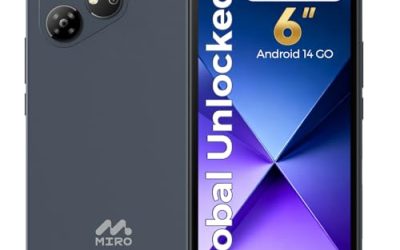
MIRO 4G Android 14 Go
The MIRO is a 6-inch Android 14 Go phone with 2GB of RAM and 32GB of storage that can be expanded to 256GB. It has dual SIM, a 3000mAh battery, a 5MP plus 2MP camera pairing, and a 3.5mm audio connection listed. It suits a traveler who wants two lines and the ability to add storage cheaply.
- Strength: Expandable storage and dual SIM add flexibility.
- Strength: Compact 6-inch size is easier to handle than the 6.8-inch models.
- Trade-off: 2GB of RAM limits multitasking.
Skip it if you run many apps at once or care about camera quality.
Generic 5.8-inch Android 14
This unbranded phone lists 2GB of RAM, 8GB of storage, a 5.8-inch HD screen, a 2850mAh battery, and dual SIM on Android 14. It is aimed at the buyer who needs a cheap phone for calls, messaging, and a few light apps, such as a spare for travel.
- Strength: Dual SIM in a modest 5.8-inch body.
- Strength: Lowest hardware tier, which suits calls and texts.
- Trade-off: 8GB of storage fills almost immediately after updates and a few apps.
Skip it if you plan to install many apps or want any real photo storage.
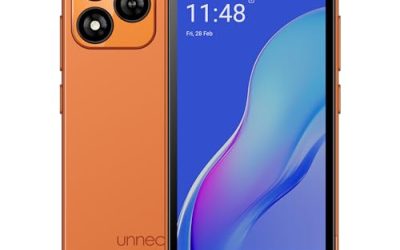
Unnecto Bolt One
The Unnecto Bolt One stresses a US warranty, 32GB of storage, Android 14 Go, dual SIM, and a 1.3GHz quad-core processor in a 5.0-inch body with a 2000mAh battery. It fits a small-handed user or a child who needs a basic 4G phone with seller support.
- Strength: The listing names a US warranty, which gives a clearer path for support.
- Strength: Small 5.0-inch size is easy to pocket.
- Trade-off: A 2000mAh battery and an entry-level processor limit daily endurance and speed.
Skip it if you stream video often or need a phone that lasts through a long day away from a charger.
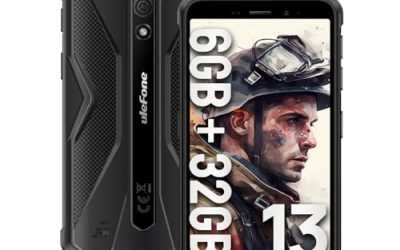
Ulefone Note 22
The Ulefone Note 22 is a 5-inch compact on Android 16 Go with 3GB of RAM plus 17GB of virtual memory, 32GB of storage, support for 2TB expandable cards, and a removable 3000mAh battery. It suits someone who values a spare-battery workflow and the newest Android release among the group.
- Strength: Removable battery allows quick swaps.
- Strength: Android 16 Go is the newest software listed.
- Trade-off: The 20GB RAM headline is mostly virtual, with only 3GB physical.
Skip it if you prefer a large display or you do not plan to carry a second battery.
TCL 60 XE NXTPAPER 5G
The TCL 60 XE adds a 6.8-inch 120Hz display with NXTPAPER 3.0, an octa-core CPU, 8GB of RAM, 128GB of storage, a 50MP main camera, and a 5010mAh battery. NXTPAPER is TCL’s paper-like display treatment, aimed at reducing glare and eye strain. It is the strongest all-round hardware here, suited to heavy readers and daily users.
- Strength: 8GB RAM and 128GB are the most generous memory and storage in the group.
- Strength: 120Hz display and a 5010mAh battery elevate everyday use.
- Trade-off: As the most capable phone here it is the one most likely to push against the cap, so confirm it still falls under 150 dollars before you commit.
Skip it if cost is the only filter and you only need calls and texts.
Which One Fits Your Situation
You read and watch a lot on your phone
Go for the TCL 60 XE NXTPAPER 5G. The 6.8-inch 120Hz screen, 8GB of RAM, and large battery serve long sessions of reading and video better than any other model here.
You want storage without paying for a bigger tier
The LUNAR Eclipse L1 gives 128GB, 5G, and a 5000mAh battery. The MIRO is the cheaper alternative if you accept 32GB with a card slot.
You carry two lines or travel between carriers
Pick the MIRO 4G Android 14 Go. Dual SIM, expandable storage, and a compact body make it a practical travel phone.
You need a small, simple phone for a child or a spare
The Unnecto Bolt One suits a first phone, and the Ulefone Note 22 suits a spare where a swappable battery matters.
Common Mistakes
- Counting virtual RAM as real memory, then wondering why the phone stutters with several apps open.
- Buying 8GB of storage for a phone that must run messaging, maps, and banking apps.
- Assuming an unlocked phone works on every carrier without checking the named networks.
- Judging cameras by megapixels, when sensor quality and processing matter more.
- Ignoring battery capacity, especially on a small phone with a 2000mAh cell.
Related guides
- Gaming Chair Cushions And Lumbar Supports
- Warranty Considerations When Buying On Sale
- How To Use Camelcamelcamel For Amazon Deals
Frequently Asked Questions
Is 2GB of RAM enough for an Android phone?
It works for calls, messaging, and light apps on a Go edition, but multitasking will feel slow. If you can, aim for at least 3GB and preferably more.
What does Android Go mean?
Go editions are lightweight versions of Android designed for phones with limited memory and storage. They run smoothly on modest hardware but may include simplified apps.
Is 5G worth it at this price?
Only if 5G coverage exists where you live and your carrier supports the phone’s bands. For many buyers, a good 4G phone with better battery and storage is the more practical choice.
Can I add more storage with a microSD card?
Some of these models list expandable storage, which is helpful for photos, music, and video. Cards are slower than built-in storage, so keep apps on the internal drive when you can.
Related guides
More from Amazon
Programs that pair well with the guide above. Offers and eligibility are set by Amazon and may change.
Free shipping on eligible items, Prime Video and more. Eligible new members can start with a free trial.
Start a Prime free trialAd-free music streaming. Eligible new subscribers can start with a free trial.
Try Music Unlimited freeA Prime membership for ages 18-24 with a trial period. Eligibility is set by Amazon.
See Prime for Young AdultsAudiobooks and podcasts to listen to on the go. Eligible new members can start with a free trial.
Try Audible freeAs an Amazon Associate we earn from qualifying purchases.