For Metaphor: ReFantazio, pick the processor with the fastest single-core speed you can afford: a Ryzen 7 9800X3D or 7800X3D if you want the best frame rate, a Ryzen 5 9600X or Core i5-14600K for most players, and anything meeting the publisher’s Core i5-7600 or Ryzen 5 2600 listing if you only want 1080p at 60 frames per second. Unlike most big games, the processor, and mainly one thread of it, is often what limits performance here, not the graphics card.
As an Amazon Associate we earn from qualifying purchases at no extra cost to you.


Top 3 picks at a glance
At a glance
| Goal | CPU class | Examples | Why |
|---|---|---|---|
| 1080p at 60 fps | Publisher’s recommended tier | Core i5-7600, Ryzen 5 2600 (and anything newer) | Stated by the publisher |
| High refresh, most players | Fast six-core | Ryzen 5 9600X, Ryzen 5 7600, Core i5-14600K | Strong per-core speed |
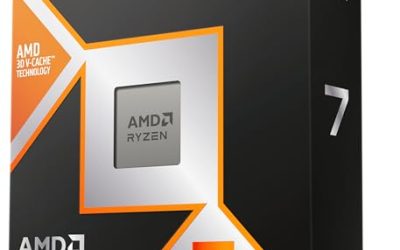
| Highest frame rates, busy scenes | Cache-heavy eight-core | Ryzen 7 9800X3D, 7800X3D | Large L3 cache and high boost speed |
| Budget upgrade on AM4 | X3D or fast six-core | Ryzen 7 5700X3D, Ryzen 5 5600 | Keeps motherboard and DDR4 |
| Old processor with no AVX | Replace | Any current chip | The game requires AVX support |
What the publisher states
The Steam page lists a minimum of an Intel Core i5-3470 or AMD FX-6300 with 6 GB of RAM and a GeForce GTX 750 Ti class card, aimed at 720p and 30 frames per second, and a recommended tier of an Intel Core i5-7600 or Ryzen 5 2600 with 8 GB of RAM and a GeForce GTX 970 class card, aimed at 1080p and 60 frames per second. It also notes that a processor with AVX support is required. The game occupies 93 GB. The listed processors are several generations old, so any chip sold today clears them. The decision in 2026 is not whether a new processor will run the game but how much extra speed shows up on screen.
Why one thread matters so much
DSOGaming reported at launch that the game relies heavily on one processor core. In a busy desert scene, it saw a GeForce RTX 4090 used only about 46 percent while no single core was fully loaded at the first measurement; a later fix reportedly raised the frame rate to 90 and above in one scene, but then one core ran at maximum and the game became processor-limited even at 4K. PC Optimized Settings, which used a Ryzen 9 7950X and a GeForce RTX 3080 Ti, reported averages near 187 frames per second at both 1080p and 1440p and about 130 at 4K, and called the game mainly processor-bound at the lower two resolutions. Player reports on ResetEra from launch month show similar behavior: a Core i5-13600K with an RTX 3060 Ti swung between roughly 60 and 120 frames per second at 1440p depending on the scene, and another player saw about 40 in the city and a locked 113 in the desert after improvements.
These are individual systems and launch-era builds, and later patches (the 1.03 update added SMAA and FXAA) may have changed things. No recent multi-processor benchmark was found for this guide, so no ranking of specific chips by frame rate is claimed. What follows from the evidence is a pattern: high single-core speed and low memory latency help; extra cores do not.
Core count, clock speed and cache
Core count
A game that leans on one thread gains little from more cores. Six cores are enough, and the extra eight-core chips of the X3D family are bought for other reasons. If you stream, record or run chat software alongside, those tasks take the other cores and leave the main thread free.
Clock speed
This is the most direct lever. Compare each maker’s listed maximum boost clock and look at independent single-thread results. Recent chips such as the Ryzen 5 9600X and Core i5-14600K are quick per core, and Intel’s higher-clocked parts do well in single-thread work. Sustained boost depends on cooling, so a decent cooler matters.
Cache
AMD lists 96 MB of L3 cache on both the Ryzen 7 7800X3D and Ryzen 7 9800X3D. Reviewers regularly report X3D chips leading in games where the processor is the limit. No Metaphor-specific X3D comparison was available, so this is general guidance. The 9800X3D also boosts higher than the 7800X3D, per the maker’s listing, which should help a one-thread-limited game.
AMD X3D versus Intel options
| Option | Strength | Trade-off |
|---|---|---|
| Ryzen 7 9800X3D | Top-end gaming chip, large cache and high clocks | Premium tier; AM5 and DDR5 required |
| Ryzen 7 7800X3D | Large cache, efficient | Slower boost clocks than the 9800X3D |
| Ryzen 5 9600X | Fast cores, value tier | Smaller cache |
| Core i5-14600K / Core i7-14700K | High boost clocks | Power draw and heat; the platform is at the end of its line |
| Core Ultra 5 245K / Ultra 7 265K | New platform, strong multi-thread | Reviewers report these trail X3D chips in games |
| Ryzen 7 5700X3D | Cache on an old board | Older cores, lower clocks |
What to pair with which GPU
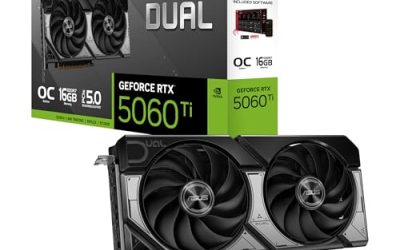
Because the game is light on graphics, the graphics card can be modest. A fast six-core with an RTX 5050, RTX 5060 or Radeon RX 9060 XT covers 1080p and 1440p at high refresh. An X3D chip pairs well with a mid-range card such as the RTX 5060 Ti or Radeon RX 9070 for 4K play. The game has no official DLSS or FSR support according to PCGamingWiki, so the card must render natively. Pairing a flagship graphics card with a mid-range processor will produce a processor-limited result, which is the opposite of the usual advice.
- Budget: Ryzen 5 5600 or Core i5-12400 with an RTX 5050 class card.
- Balanced: Ryzen 5 9600X or Core i5-14600K with an RTX 5060 Ti or RX 9060 XT.
- High-end: Ryzen 7 9800X3D with an RTX 5070 Ti or RX 9070 XT.
Memory and tuning
The listed minimum RAM is 6 GB and the recommended is 8 GB, but any new build will carry 16 GB or 32 GB. Run memory in dual channel at the speed the board and processor maker support; for AMD AM5, check your board’s memory support list in its manual, because the sweet-spot speed varies by board and processor. Enabling the memory’s rated profile in the BIOS can change stability and may affect warranty terms on some boards; keep settings conservative, and consult the motherboard manual or maker support if the system becomes unstable.
Community tools exist to uncap the menu frame rate and to tweak the game, such as Lyall’s MetaphorFix noted by PCGamingWiki, which also notes menus are capped at 60 frames per second in the stock game. Third-party tools are unofficial and used at your own risk.
Pick this CPU if…
| If you… | Pick |
|---|---|
| Just want 1080p at 60 fps | Any chip at or above Core i5-7600 / Ryzen 5 2600 |
| Want high refresh on a budget | Ryzen 5 7600 / 9600X or Core i5-14600K |
| Want the smoothest busy scenes | Ryzen 7 9800X3D |
| Own an AM4 board | Ryzen 7 5700X3D or Ryzen 5 5600 |
| Play on a laptop | A recent high-boost laptop chip with good cooling |
Common mistakes
- Buying a bigger graphics card to fix low frames. If the frame rate is the same at 1080p and 1440p, the processor is the limit.
- Paying for more cores. The game reportedly leans on a single thread.
- Using a processor without AVX. The publisher states AVX support is required.
- Single-channel memory. It can hold back a processor-limited game.
- Ignoring cooling. Sustained boost clocks depend on it.
Frequently Asked Questions
Is Metaphor: ReFantazio CPU-heavy?
Reviewers and players report it is, with heavy use of one core and drops in busy scenes. The listed requirements are modest, but frame rates well above 60 depend on a fast processor.
Do I need an X3D chip?
No. The publisher lists a Ryzen 5 2600 or Core i5-7600 for 1080p at 60 frames per second. An X3D chip is for players who want the highest frame rate.
Will more cores help?
Probably little, because reports say the game relies heavily on one thread. Faster cores help more than more cores.
Does the processor requirement include AVX?
Yes. The publisher says a processor with AVX support is required, so very old chips may not run it.
Does a better graphics card improve the frame rate?
Only until the processor becomes the limit. Reports show similar frame rates at 1080p and 1440p on strong cards, so the processor often decides the result.
Are community fixes worth using?
PCGamingWiki lists tools that uncap menu frame rates and add upscaling and HDR. They are unofficial, so use them at your own risk and keep the game’s files backed up.
Related guides
More from Amazon
Programs that pair well with the guide above. Offers and eligibility are set by Amazon and may change.
Free shipping on eligible items, Prime Video and more. Eligible new members can start with a free trial.
Start a Prime free trialAd-free music streaming. Eligible new subscribers can start with a free trial.
Try Music Unlimited freeA Prime membership for ages 18-24 with a trial period. Eligibility is set by Amazon.
See Prime for Young AdultsAudiobooks and podcasts to listen to on the go. Eligible new members can start with a free trial.
Try Audible freeAs an Amazon Associate we earn from qualifying purchases.