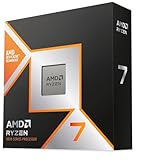
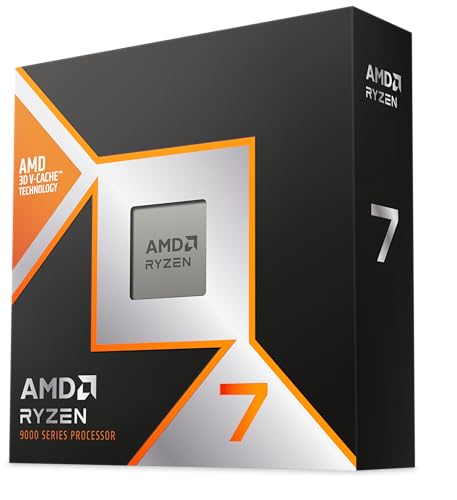
For Satisfactory, buy the processor with the fastest single-core speed you can afford: the Ryzen 7 9800X3D or Ryzen 7 7800X3D for large late-game factories, and a Ryzen 5 or Core i5 class six-core chip for early and mid-game play, because the game’s main factory simulation leans heavily on one core.
As an Amazon Associate we earn from qualifying purchases at no extra cost to you.


Our Top Picks


Top 3 picks at a glance
What the developer lists
The Steam page lists a minimum of a Core i5-3570 at 3.4 GHz with four cores, 8 GB of memory and a GTX 1650 class graphics card. The recommended tier is a Ryzen 5 5600X or Core i5-12400 or equivalent performance, with six physical cores minimum, 16 GB of memory and an RTX 2070 or RX 5700 class card. The developer’s wording stresses physical cores and equivalent performance. No tier is published for very large factories, so how far a given chip carries you depends on your save.
Why this game punishes weak cores
Community guides report that Satisfactory slows in large bases because the central simulation (belts, machines, power) is difficult to spread across many threads. A server-hosting guide quotes a developer saying the game loop is still fundamentally single-threaded. A Steam patch-note quote describes factory tick parallelisation that uses more cores when available, with gains depending on the processor. Another guide reports GPU use around 40 to 60 percent in big factories while processor cores are maxed. No outlet found in this research published a head-to-head X3D versus non-X3D benchmark for the game, so treat the cache advantage as a likely but unquantified benefit. Guides name the Ryzen 7 7800X3D, Core i9-14900K and Ryzen 9 9900X as strong performers, which are recommendations rather than measured results.
Core count, clock and cache
- Clock speed and per-core performance: The most important factor, according to community guides, for big saves.
- Core count: Six physical cores is the developer’s recommended floor. More cores help multiplayer hosting, background tasks and any factory work that is parallelised, but they will not fix a weak primary core.
- Cache: AMD’s X3D chips add a large L3 cache that often helps simulation-heavy games. PC Games Hardware advice, as noted on public reference pages, recommends the Ryzen 7 9800X3D for gamers who do not need productivity performance, because it is slightly faster in games and has a single compute die. That is general gaming advice and not a Satisfactory measurement.
- Memory: 16 GB is recommended; fast dual-channel memory helps CPU-limited scenes.
Comparison of sensible options
| Processor | Class | Best for | Limits |
|---|---|---|---|
| Ryzen 5 5600 / 5600X | Budget, AM4 | Developer’s recommended class; early to mid-game factories | Older platform; large bases will strain it |
| Core i5-12400 / 12400F | Budget, LGA1700 | Matches the developer’s recommended line | Six cores, older generation |
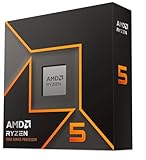
| Ryzen 5 9600X | Mid-range, AM5 | New build with good per-core speed and an upgrade path | No stacked cache |
| Core Ultra 5 245K / Core Ultra 7 265K | Mid-range, LGA1851 | Mixed gaming and work, hosting servers | Gaming leads vary by title |
| Ryzen 7 7800X3D | High-end, AM5 | Large factories, cache-heavy simulation | Availability varies |
| Ryzen 7 9800X3D | Premium, AM5 | Maximum gaming headroom across many titles | Premium tier cost |
| Ryzen 9 9900X | High-end, AM5 | Gaming plus heavy productivity | Two compute dies; not a clear gaming advantage |
What to pair with which GPU
- Entry GPU (RTX 5050, Radeon RX 6600 class): a Ryzen 5 5600 or Core i5-12400 is enough.
- Mid-range GPU (RTX 5060 Ti, Radeon RX 9060 XT): a Ryzen 5 9600X or Core Ultra 5 gives a balanced build. If your factories are large, step to a 7800X3D.
- High-end GPU (RTX 5070 Ti and above, Radeon RX 9070 XT): pair with an X3D chip so the GPU is not left waiting in the late game.
Pick X if
| Pick this | If you |
|---|---|
| Ryzen 5 5600 or Core i5-12400 | Are on a tight budget and play early or mid-game builds |
| Ryzen 5 9600X | Want a new AM5 platform with the option to upgrade to an X3D later |
| Ryzen 7 7800X3D | Build large factories and want strong gaming performance on AM5 |
| Ryzen 7 9800X3D | Want the strongest single choice for gaming now, including other games |
| Core Ultra 7 265K or Ryzen 9 9900X | Also host a dedicated server, stream or edit video |
Alternatives and what to skip
A Ryzen 7 5700X3D on an existing AM4 board is a lower-cost way to add stacked cache if your motherboard BIOS supports it. Intel’s 13th and 14th generation Core i7 and i9 parts remain strong per-core options, though read the maker’s guidance on microcode and stability updates for those generations before buying. Skip chips with fewer than six physical cores, and skip paying for 16-core processors for the game alone; community guides emphasise single-core speed, not total thread count.
Practical ways to reduce CPU load
- Split your factory across areas of the map instead of one very dense block.
- Reduce unnecessary belts and long chains where possible.
- Keep the game and saves on a solid state drive.
- Make sure memory runs in dual channel at its rated speed.
- Keep the processor cooled so that boost clocks are sustained.
Frequently Asked Questions
Is Satisfactory CPU-intensive?
Yes, in large factories. Community guides report the simulation depends on single-core speed, and the developer recommends six physical cores.
Is an X3D processor worth it for Satisfactory?
It is likely to help in a cache-sensitive simulation, and guides name the 7800X3D as strong. However, this research found no published head-to-head benchmark, so the gain size is unconfirmed.
How many cores do I need?
The developer lists six physical cores as the recommended minimum. More can help with multiplayer and background tasks, but single-core speed matters most.
Can a Ryzen 5 5600X run Satisfactory?
Yes, it is named in the developer’s recommended tier. Very large bases may eventually push it harder than a newer chip.
Should I upgrade my CPU or GPU for big factories?
If the processor is maxed while GPU use stays low, upgrade the CPU. If both are comfortable but visuals are limited, the GPU is the better upgrade.
Does Intel or AMD work better?
Both are supported. Guides mention strong chips from each, so choose on platform cost and your other uses.
Related guides
More from Amazon
Programs that pair well with the guide above. Offers and eligibility are set by Amazon and may change.
Free shipping on eligible items, Prime Video and more. Eligible new members can start with a free trial.
Start a Prime free trialAd-free music streaming. Eligible new subscribers can start with a free trial.
Try Music Unlimited freeA Prime membership for ages 18-24 with a trial period. Eligibility is set by Amazon.
See Prime for Young AdultsAudiobooks and podcasts to listen to on the go. Eligible new members can start with a free trial.
Try Audible freeAs an Amazon Associate we earn from qualifying purchases.