Shopping for a new fitness watch means choosing between two very different product families that share a shelf. One is the established health platform from a sports or wearable brand, with a tuned GPS, a recovery coach, and a proper companion app. The other is the generic smartwatch, with a bigger screen, a long list of sport modes, and a low entry point. The right pick depends on whether you want training insight or simply a wrist display that counts steps and answers calls.
This guide is for walkers, gym-goers, and runners who want a watch that tracks heart rate, sleep, and workouts without a steep learning curve. The eight watches below are judged only from their listed features, so use the notes to compare screen size, GPS, calling, and platform before you buy in 2026.
Our Top Picks

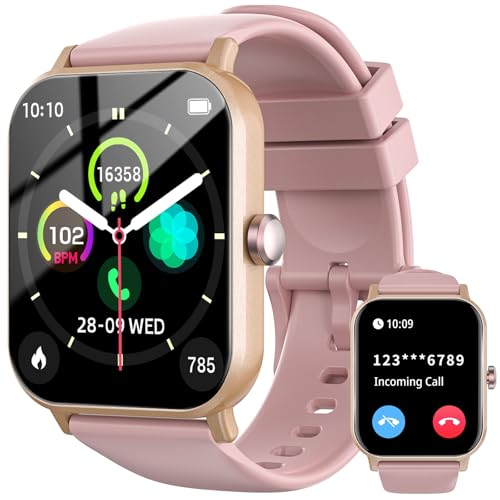


Top 3 picks at a glance
Quick Picks
As an Amazon Associate we earn from qualifying purchases at no extra cost to you.


| Product | Best for | Key spec from the title |
|---|---|---|
| 1.91 inch Calling Smartwatch | Big screen on a budget | 1.91″, Bluetooth calling, 24/7 heart rate |
| 120 Sports Modes Smartwatch | Alexa users | 1.83″ HD, Alexa built in, IP67 |
| 1.83 inch Fitness Tracker Watch | Sport-mode variety | 1.83″, 120+ sports modes, calling |
| 2.06 inch GPS Fitness Watch | Runners on a budget | Built-in GPS, 2.06″ HD, 110+ modes |
| 1.57 inch Fitness Tracker | Smaller wrists | 1.57″ HD, 110+ sports modes |
| Garmin vivoactive 5 | Training-focused health data | GPS, 42mm, Body Battery, Sleep Coach |
| 113+ Sport Modes Smartwatch | Everyday tracking | 1.91″ HD, 113+ sport modes, calling |
| Fitbit Versa 4 | Health platform users | GPS, Daily Readiness, 24/7 heart rate |
How to Choose
Built-in GPS or phone GPS
A watch with its own GPS records a run without your phone, so you can leave the phone at home. Watches without it borrow the phone’s signal and lose route detail if the phone is far away. If you run, ride, or hike regularly, built-in GPS is the feature that matters most.
Screen size and wrist fit
Screens in this group range from 1.57 to 2.06 inches. A bigger display reads easily mid-workout but looks bulky on a small wrist. A 42mm case such as Garmin’s is a more conservative fit. Try to compare the case diameter against your wrist rather than relying on the screen number alone.
Health tracking depth and platform
Every watch here lists heart rate and sleep tracking, but the interpretation differs. Platform watches turn the data into readiness or energy scores and keep long-term trends in a polished app. Generic models often show the raw numbers and little else. Think about whether you want advice or just a number.
Calling, assistants, and what to ignore
Bluetooth calling lets you answer from the wrist, which is handy but drains the battery faster. Sport mode counts of 110 or 120 are marketing; most people use five or six. Budget models cut corners on app polish and data accuracy, so lean on the features you will actually use: GPS, heart rate, sleep, and notifications. If a listing leans heavily on slogans and gives few concrete specs, that is a signal to compare it against a platform watch before paying.
It also helps to decide on battery habits. A watch you charge nightly fits a bedside routine, but a sleep-tracking watch needs a charging slot during the day, such as at your desk. Calling and always-on features shorten the gap between charges, so choose with your routine in mind rather than a headline number.
The 8 Best Options
1.91 inch Calling Smartwatch for Men
A large 1.91 inch display with Bluetooth answer-and-call, 24/7 heart rate, and sleep monitoring. It suits buyers who want a big, easy-to-read screen and a low entry point. For office workers who want call alerts and step counts, it covers the basics without a complicated app. It also appeals to those who prefer a bold look over a minimal one. Because it lists calling, the speaker and microphone matter, so read the full listing for how calls are handled and how it connects to the phone before assuming it replaces a headset.
- Strength: a large 1.91 inch screen is easy to read.
- Strength: Bluetooth calling and 24/7 heart rate tracking.
- Trade-off: the title lists no built-in GPS.
Skip it if you plan to run outdoors without a phone.
120 Sports Modes Smartwatch with Alexa
A 1.83 inch HD smartwatch with Alexa built in, heart rate and sleep monitoring, IP67 waterproofing, and Bluetooth calls and music control. The Alexa feature lets smart-home users ask questions from the wrist. It suits those who already use Alexa devices at home. Music control from the wrist is a convenient extra on a run or in the kitchen, and the IP67 rating means a splash at the sink is nothing to worry about. Think of it as a gym-and-home watch rather than a pool one.
- Strength: Alexa built in for voice requests.
- Strength: IP67 water resistance handles sweat and rain.
- Trade-off: IP67 is not meant for swimming.
Skip it if you plan to swim laps.
1.83 inch Fitness Tracker Watch with Calling
A new-generation 1.83 inch fitness watch with calling, heart rate, sleep monitor, a step tracker, and 120+ sports modes. The wide mode list helps buyers who try many activities. It is a general-purpose choice for gym visits, walks, and casual sports. The step tracker is the feature most buyers use daily, and the long mode list gives beginners room to experiment with yoga, cycling, or court sports without changing devices.
- Strength: 120+ sports modes cover many activities.
- Strength: calling plus step and sleep tracking.
- Trade-off: no GPS is mentioned in the title.
Skip it if you want route tracking.
2.06 inch GPS Fitness Watch
This one lists built-in GPS, a 2.06 inch HD screen, 110+ sports modes, heart rate, and calling. Built-in GPS is the highlight for runners and cyclists on a budget. The big screen suits workout glances but may be bulky on small wrists. Heart rate and sleep tracking are listed as well, so it doubles as an all-day wearable, and the calling feature adds convenience for errands. Expect the battery to take a hit whenever GPS is running for long sessions.
- Strength: built-in GPS records outdoor routes.
- Strength: a large 2.06 inch HD screen.
- Trade-off: the size can feel heavy during runs.
Skip it if you have a small wrist.
1.57 inch HD Fitness Tracker Watch
A smaller 1.57 inch smartwatch with 110+ sports modes, heart rate, and sleep monitoring, with calling support. The compact screen suits smaller wrists and looks less obtrusive in an office. It trades screen size for comfort. Teenagers and smaller adults who find 1.9 inch watches clumsy are the obvious audience. At this size, expect notifications to be truncated, so it works best as a glance device.
- Strength: a smaller screen fits smaller wrists.
- Strength: calling and sports mode support.
- Trade-off: less room for on-screen data.
Skip it if you want a big display.
Garmin vivoactive 5
A 42mm GPS smartwatch with 24/7 health monitoring, built-in sports apps, a Sleep Coach, and Body Battery energy monitoring. It is the training-focused pick, with data interpretation from an established sports platform. It suits runners, gym-goers, and anyone who wants recovery guidance. The compact 42mm case is friendly to smaller wrists, and the sports apps are built in rather than bolted on through a third-party store. Its main appeal is that the data comes with an explanation of what to do next.
- Strength: Body Battery and Sleep Coach turn data into guidance.
- Strength: built-in GPS and sports apps.
- Trade-off: it sits above the budget tier.
Skip it if you only want step counts and notifications.
113+ Sport Modes Smartwatch
A 1.91 inch HD smartwatch with answer and make calls, heart rate, sleep, pedometer, calories, and 113+ sport modes. A broad everyday tracker for people who want one watch for work and gym. The feature list is long but the platform is basic. Calorie and pedometer readouts give a quick daily summary, which is plenty for someone building a walking habit. Treat the sport mode count as a menu, not a promise of specialized tracking in each one.
- Strength: 113+ sport modes and a pedometer.
- Strength: a 1.91 inch HD screen for clear reading.
- Trade-off: no GPS is mentioned.
Skip it if you need route data.
Google Fitbit Versa 4
A fitness smartwatch with 24/7 heart rate, Daily Readiness, GPS, and a three-month Google Health Premium membership included. It suits people who prefer a polished health app with readiness guidance. The trial membership adds depth for new users. People who already track sleep and steps in a Google account will find the setup familiar, and the readiness score gives a simple answer to whether today is a hard or an easy day.
- Strength: Daily Readiness helps plan workouts.
- Strength: built-in GPS and 24/7 heart rate.
- Trade-off: some insights sit behind the premium membership after the trial.
Skip it if you want zero subscriptions.
Which One Fits Your Situation
You run outdoors
The Garmin vivoactive 5 and the 2.06 inch GPS Fitness Watch both list built-in GPS, with the Garmin adding recovery guidance.
You want a cheap daily tracker
The 1.91 inch Calling Smartwatch or the 113+ Sport Modes model covers heart rate, sleep, and calls.
You use Alexa at home
The 120 Sports Modes Smartwatch with Alexa suits voice-driven homes.
You prefer an established health app
The Fitbit Versa 4 offers Daily Readiness and a premium trial, which helps beginners understand what the numbers mean. Anyone with a history of tracking in a Google account will settle in quickly.
Common Mistakes
- Counting sport modes as a reason to buy.
- Expecting accurate route tracking from a watch with no GPS.
- Assuming IP67 means a swim-ready watch.
- Ignoring case size relative to wrist size.
- Overlooking subscription features after a trial ends.
Related guides
- Gaming Chair Cushions And Lumbar Supports
- Business Laptops With Long Battery Life
- Travel Backpack With Laptop Compartment
Frequently Asked Questions
Do I need built-in GPS?
Only if you run or ride without your phone. For gym use and walking, phone GPS is enough.
Is Bluetooth calling useful?
It is convenient for short calls, though battery life drops when you use it often. For long conversations a phone or earbuds are still more comfortable, so treat wrist calling as a way to avoid missing a call while your hands are busy.
Are generic smartwatches accurate?
Heart rate readings are usually good enough for trends during steady activity, though wrist sensors can wander during intervals or heavy lifting, and the apps rarely turn data into advice like platform watches do.
Will a watch work with my phone?
Most pair with iOS and Android, but check the listing for compatibility before buying. Generic models rely on a companion app of varying quality, while platform watches use a mature app with years of updates behind it. That difference shows up most after the first month, once the novelty fades.
Related guides
More from Amazon
Programs that pair well with the guide above. Offers and eligibility are set by Amazon and may change.
Free shipping on eligible items, Prime Video and more. Eligible new members can start with a free trial.
Start a Prime free trialAd-free music streaming. Eligible new subscribers can start with a free trial.
Try Music Unlimited freeA Prime membership for ages 18-24 with a trial period. Eligibility is set by Amazon.
See Prime for Young AdultsAudiobooks and podcasts to listen to on the go. Eligible new members can start with a free trial.
Try Audible freeAs an Amazon Associate we earn from qualifying purchases.