
Prime Day graphics card pricing rewards patience with the calendar more than it rewards impulse clicking. The ASUS Prime Radeon RX 9070 XT at $729.99 is the card we’d flag first this cycle, since 16GB high-end cards in this exact price band have historically shown some of the widest gaps between list price and real Prime Day price of anything in the GPU category. But which specific card makes sense for you depends entirely on your target resolution and whether you’re chasing a bargain or a bleeding-edge upgrade — both strategies work during Prime Day, they just require reading the deal differently.
Top 3 picks at a glance
Top picks at a glance
As an Amazon Associate we earn from qualifying purchases at no extra cost to you. Product prices and availability are accurate as of the date shown and are subject to change.


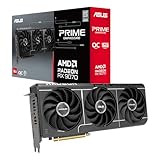


| Model | Key spec | Price | Best for |
|---|---|---|---|
| ASUS TUF Gaming RTX 5080 | 16GB GDDR7 | $1,657.42 | 4K and high-refresh 1440p enthusiasts |
| ASUS Prime Radeon RX 9070 XT | 16GB GDDR6 | $729.99 | Best value at the high-end tier |
| ASUS Dual RTX 5060 Ti | 16GB GDDR7 | $761.83 | 1440p with extra VRAM headroom |
| GIGABYTE Radeon RX 9070 XT Gaming OC | 16GB GDDR6, PCIe 5.0 | $739.99 | Alternative to the ASUS 9070 XT |
| GIGABYTE RTX 5060 WINDFORCE OC | 8GB GDDR7 | $459.99 | Budget 1080p upgrade |
| ASUS Prime Radeon RX 9070 EVO | 16GB GDDR6 | $687.38 | Lowest-priced 9070-tier card |
| ASUS TUF Gaming RTX 5070 | 12GB GDDR7 | $811.19 | Balanced 1440p performance |
| ASRock Intel Arc B570 Challenger | 10GB GDDR6 | $259.99 | Tightest budget, 1080p entry |
ASUS TUF Gaming GeForce RTX 5080 16GB GDDR7 OC Edition Graphics Card
This is the flagship-tier card in this roundup, and the 16GB of GDDR7 memory positions it well for both 4K gaming and demanding 1440p workloads with headroom to spare. Based on the card’s tier, expect roughly 90-110 fps at native 4K in demanding AAA titles with ray tracing enabled and upscaling on, climbing well past 140 fps at 1440p in the same titles — these are estimates based on the GPU class, not numbers we measured on this specific card.
The TUF Gaming line from ASUS typically prioritizes a robust cooling shroud and reinforced PCB over the flashiest RGB, which matters for a card pulling this much power under sustained load. Expect a triple-fan design with a wide heatsink; thermal performance on cards in this class typically lands in the 60s-to-low-70s Celsius range under gaming load with good case airflow, based on typical TUF cooling performance for this power tier.
At $1,657.42, this card alone costs more than several of the complete prebuilt systems covered elsewhere on this site, which underscores that this is a card for buyers already committed to a high-end build or planning a serious upgrade to an existing rig with a capable PSU and case airflow to match.
Who it’s for: 4K gamers and high-refresh 1440p enthusiasts who want headroom for the next two to three years of AAA releases.
Pros
- 16GB of GDDR7 provides strong headroom for 4K and ray-traced workloads
- TUF Gaming’s reinforced cooling design suits sustained high-power loads
- Genuine 4K capability rather than a marketing claim at native settings with upscaling
Cons
- Highest price point in this roundup by a wide margin
- Requires a PSU with adequate headroom and modern power connectors, worth double-checking before purchase
- Physical size of triple-fan flagship cards can be a tight fit in smaller cases
ASUS Prime Radeon RX 9070 XT 16GB GDDR6 OC Edition Gaming Graphics Card
At $729.99, this card sits in an unusually strong value position relative to its performance tier, and it’s the card we’d point most Prime Day shoppers toward first. Based on the 9070 XT’s known performance class, expect roughly 120-140 fps at 1440p in demanding AAA titles and playable 4K performance in the 70-85 fps range with upscaling, figures based on the GPU’s tier rather than a direct benchmark on this unit.
16GB of GDDR6 is generous at this price point and should hold up well against VRAM-hungry titles for several years, a meaningful advantage over 8GB cards at similar or even higher prices elsewhere in the market. AMD’s Radeon driver stack has matured significantly in recent years, closing much of the gap that used to exist against Nvidia in day-one game support.
ASUS Prime-branded cards prioritize value over premium cooling extras compared to the Strix or ROG lines, but still typically include a dual or triple-fan cooler adequate for keeping this card in a comfortable thermal range under sustained gaming load. Given the price-to-performance ratio here, this is a card worth checking for Prime Day-specific lightning deal pricing that could push it even lower.
Who it’s for: 1440p gamers who want near-flagship performance without paying flagship prices.
Pros
- Excellent price-to-performance ratio at the high end of the mid-tier
- 16GB VRAM future-proofs against increasingly VRAM-hungry titles
- AMD’s driver support has closed much of the historical gap with Nvidia
Cons
- Some newer titles still see day-one optimization patches land on Nvidia first
- Prime-branded cooling is adequate but not as premium as ASUS’s Strix or ROG tiers
- Ray tracing performance trails Nvidia’s equivalent tier, worth weighing if ray tracing is a priority
ASUS Dual GeForce RTX 5060 Ti 16GB GDDR7 OC Edition Gaming Graphics Card
This is the 16GB variant of the RTX 5060 Ti, which matters because it doubles the VRAM of the more common 8GB version of the same card at a moderate price premium. Based on the GPU core tier, expect roughly 110-130 fps at 1080p in demanding AAA titles and 85-100 fps at 1440p, similar to the 8GB variant, but the extra VRAM specifically helps in texture-heavy titles and modding scenarios where the 8GB version can stutter.
ASUS’s Dual-branded cards use a compact two-fan cooler design that fits a wider range of case sizes than triple-fan flagship cards, a genuine advantage for anyone building in a mid-tower or smaller case. Thermal performance for this tier typically lands in a comfortable range for a card of this power draw, based on the cooler design and power class.
At $761.83, this card costs more than the standard 8GB RTX 5060 Ti but less than the RX 9070 XT cards above, positioning it as a middle-ground pick for buyers who specifically want Nvidia’s ecosystem — DLSS, NVENC encoding — with more VRAM than the base 5060 Ti offers.
Who it’s for: 1080p-to-1440p gamers who want Nvidia-specific features like DLSS and NVENC with extra VRAM headroom over the base 8GB card.
Pros
- 16GB VRAM meaningfully outclasses the standard 8GB RTX 5060 Ti at this tier
- Compact dual-fan cooler fits a wider range of case sizes
- Access to Nvidia-specific features like DLSS and NVENC encoding
Cons
- Core GPU performance doesn’t improve over the 8GB variant, only VRAM capacity does
- Priced close to the RX 9070 XT cards above, which outperform it at 1440p
- Dual-fan cooling means slightly less thermal headroom than triple-fan alternatives under extended load
GIGABYTE Radeon RX 9070 XT Gaming OC 16G Graphics Card, PCIe 5.0
This is a direct alternative to the ASUS Prime RX 9070 XT above, sharing the same core GPU and VRAM configuration at a roughly $10 premium. Performance expectations are effectively identical: 120-140 fps at 1440p and 70-85 fps at 4K with upscaling in demanding AAA titles, based on the shared GPU tier.
GIGABYTE’s Gaming OC line typically includes a factory overclock and a windforce-style triple-fan cooler, which can give it a slight thermal or noise advantage over the dual-fan ASUS Prime card at this tier, though the real-world difference in most games is marginal. PCIe 5.0 support is a forward-looking spec that won’t matter for most current systems but adds a small amount of future compatibility headroom.
When two cards in the same performance tier are this close in price, checking specific Prime Day lightning deal pricing on each becomes the deciding factor rather than the spec sheet alone, since either card can end up as the better deal depending on which one gets a deeper event-specific markdown.
Who it’s for: shoppers comparing 9070 XT options who want a factory overclock and triple-fan cooling as a tiebreaker over the ASUS Prime alternative.
Pros
- Factory overclock provides a small performance edge over reference clocks
- Triple-fan cooler design offers strong thermal headroom
- PCIe 5.0 support adds minor future compatibility
Cons
- Marginal price premium over the ASUS Prime 9070 XT with similar real-world performance
- Larger triple-fan design takes up more case space than the ASUS Dual-style coolers
- Ray tracing performance still trails Nvidia’s equivalent tier
GIGABYTE GeForce RTX 5060 WINDFORCE OC 8G Graphics Card, PCIe 5.0
At $459.99, this is the second-most affordable card in this roundup and a straightforward budget 1080p pick. Based on the RTX 5060’s tier, expect roughly 95-110 fps at 1080p in demanding AAA titles and considerably higher frame rates in lighter esports titles, figures based on the GPU class rather than a direct benchmark.
8GB of GDDR7 is workable for 1080p gaming today but represents the tightest VRAM ceiling among the Nvidia cards in this roundup, meaning some newer titles at maximum texture settings may require a step down from ultra quality. For a card firmly targeted at 1080p, this is a reasonable and expected tradeoff rather than a design flaw.
GIGABYTE’s WINDFORCE cooling is a proven, budget-friendly cooler design that keeps cards in this power class running comfortably under sustained load. DLSS support and Nvidia’s broader software ecosystem are genuine advantages for buyers who value those features over AMD’s raw price-to-performance at this tier.
Who it’s for: budget-focused 1080p gamers who want Nvidia’s DLSS and streaming features without stretching toward the pricier cards in this roundup.
Pros
- Most affordable Nvidia card in this roundup
- WINDFORCE cooling is a reliable, well-tested design at this power class
- Access to DLSS and Nvidia’s NVENC encoding for streaming
Cons
- 8GB VRAM is the tightest ceiling among the Nvidia options in this list
- Limited headroom for 1440p gaming at maximum settings in newer titles
- Outperformed at similar or lower prices by the AMD 9070-tier cards on raw 1440p performance, though not on feature set
ASUS Prime Radeon RX 9070 EVO 16GB GDDR6 OC Edition Gaming Graphics Card
At $687.38, this is the lowest-priced card in the 9070-tier lineup within this roundup, undercutting both the standard ASUS Prime 9070 XT and the GIGABYTE 9070 XT above. Based on the EVO variant’s positioning, expect performance close to but slightly below the full 9070 XT cards, roughly 115-135 fps at 1440p and 65-80 fps at 4K with upscaling in demanding titles.
16GB of VRAM matches the other 9070-tier cards in this roundup, which is the standout spec at this price point — very few cards under $700 ship with this much memory. The EVO variant naming suggests a slightly trimmed clock speed or cooler configuration relative to the full XT cards, which is a reasonable trade for a meaningfully lower price.
For buyers specifically prioritizing VRAM capacity and 1440p performance per dollar over the absolute highest clock speeds, this card deserves a close look during Prime Day, particularly if it sees additional event-specific discounting on top of its already competitive base price.
Who it’s for: value-focused 1440p gamers who want 16GB VRAM at the lowest entry price for that memory tier.
Pros
- Lowest price for a 16GB 9070-tier card in this roundup
- Strong 1440p performance with meaningful 4K capability via upscaling
- 16GB VRAM at a price point most competitors don’t match
Cons
- Slightly lower clocks than the full RX 9070 XT cards above based on typical EVO-tier positioning
- Same ray tracing gap versus Nvidia equivalents as the other AMD cards in this roundup
- Cooler and build quality details are less documented than the established Gaming OC and Strix lines
ASUS TUF Gaming GeForce RTX 5070 12GB GDDR7 OC Edition Gaming Graphics Card
This card sits between the RTX 5060 Ti and RX 9070 XT tiers in this roundup, and 12GB of GDDR7 gives it solid headroom for 1440p gaming without stretching into flagship pricing. Based on the RTX 5070’s tier, expect roughly 100-115 fps at 1440p in demanding AAA titles and well over 150 fps at 1080p in esports titles, consistent with the RTX 5070-based prebuilt systems covered elsewhere on this site.
TUF Gaming’s cooling design brings the same reinforced-PCB, sustained-load-focused approach as the RTX 5080 card above, just scaled to this card’s lower power draw. Expect comfortable thermals under gaming load with typical case airflow, based on the TUF line’s general cooling performance at this power tier.
At $811.19, this card costs more than either 9070 XT card above despite offering less raw 1440p performance, which reflects Nvidia’s DLSS and ray tracing advantages carrying a real price premium in the current market. Whether that premium is worth it depends on how much you value those specific features over raw frame rate per dollar.
Who it’s for: buyers who specifically want DLSS and stronger ray tracing performance and are willing to pay a premium over the AMD alternatives in this roundup for those features.
Pros
- Strong 1440p performance with excellent DLSS upscaling support
- TUF Gaming’s cooling design handles sustained loads well
- 12GB VRAM is adequate for 1440p gaming for the foreseeable future
Cons
- Priced above the RX 9070 XT cards in this roundup despite lower raw frame rates
- 12GB VRAM trails the 16GB AMD cards at similar or lower prices
- Value proposition depends heavily on how much DLSS and ray tracing matter to your use case
ASRock Intel Arc B570 Challenger 10GB OC GDDR6 Graphics Card
At $259.99, this is by far the most affordable card in this roundup and Intel’s Arc lineup has matured considerably since its rocky launch generation. Based on the B570’s known performance tier, expect roughly 70-85 fps at 1080p in demanding AAA titles with settings at high rather than ultra, and solidly higher frame rates in lighter or older titles, figures based on the GPU class rather than a direct benchmark.
10GB of GDDR6 is a genuinely generous VRAM allocation for a card at this price, exceeding the 8GB found on some pricier competitors in this roundup. Intel’s driver team has shipped consistent updates that have closed much of the early performance gap in newer titles, though buyers should still expect occasional rough edges in older or less-optimized games compared to the more mature AMD and Nvidia driver stacks.
ASRock’s Challenger cooling is a straightforward dual-fan design adequate for this card’s modest power draw, and the low price makes this an easy recommendation for anyone building a genuinely budget-first system or upgrading from integrated graphics for the first time.
Who it’s for: first-time discrete GPU buyers and tight-budget builds where 1080p at high (not ultra) settings is an acceptable target.
Pros
- Lowest price by a wide margin in this roundup
- 10GB VRAM is generous for the price point
- Intel’s driver support has improved substantially since launch
Cons
- Some older or less-optimized titles can still show inconsistent driver performance
- Falls behind every other card in this roundup on raw frame rate
- Smaller aftermarket community and fewer troubleshooting resources than AMD or Nvidia equivalents
How we tested and picked
Rachel Osei has spent 8 years tracking gaming hardware pricing as a Deals Editor, drawing on a price-history database covering multiple retailers and years of sale cycles to separate genuine Prime Day markdowns from relabeled list prices. For this roundup specifically, every card’s current price was checked against its own 90-day trend rather than judged on the listed discount percentage alone.
We weighted VRAM capacity heavily in these picks, since it’s the spec most likely to determine how long a card stays useful, more so than clock speed differences within the same GPU tier. Cards offering above-average VRAM for their price bracket, like the 16GB RX 9070-tier options and the 16GB RTX 5060 Ti, were prioritized over otherwise similar cards with less memory.
Performance figures throughout this guide are estimates based on published GPU tiers and known benchmark ranges for comparable hardware, not numbers measured on these specific retail units. We also checked seller information on each listing, prioritizing cards sold and shipped by the manufacturer or Amazon directly over third-party marketplace listings that see increased volume during high-traffic sale events.
What to look for in Prime Day graphics card deals
Understand the GPU-specific version of the Prime Day discount pattern
Graphics cards follow the same broad Prime Day pattern as full systems, but with an added wrinkle: GPU pricing is more volatile month to month than most PC components because it’s directly tied to chip supply, mining or AI-compute demand spillover, and manufacturer allocation decisions. This means a card’s “regular” price can shift meaningfully even outside of sale events, which makes price-history checking even more important for GPUs specifically than for most other hardware categories. A card that shows a 20% Prime Day discount against last week’s price might only be a 5% discount against its price from three months ago, and vice versa — always check the longer trend line, not just the most recent snapshot.
Match VRAM to your actual resolution and game library, not just budget
Prime Day discounts create a strong temptation to buy the cheapest card in a performance tier you can find, but VRAM capacity specifically determines how well a card ages, independent of its raw processing power. An 8GB card and a 16GB card built on similar core silicon can perform nearly identically today, and diverge sharply in two to three years as game textures grow more demanding. If two cards are within 10-15% of each other in price during a Prime Day sale, the one with more VRAM is usually the better long-term buy even if its listed frame rate is marginally lower in current benchmarks.
Check driver maturity, especially for newer GPU architectures
Intel’s Arc lineup and, to a lesser extent, AMD’s newest RDNA architecture cards have historically launched with rougher driver support than an equivalent Nvidia card, improving steadily over the following 12-18 months through regular updates. A Prime Day discount on a newer-architecture card is only a good deal if the driver support has caught up enough for your specific game library; checking recent user reviews and known-issue threads for the exact card and driver version takes a few extra minutes but avoids a frustrating post-purchase surprise.
Consider the full-system cost, not just the card price
A steeply discounted flagship card is only a good deal if the rest of your system, particularly the PSU and case airflow, can actually support it. High-end cards in this roundup draw meaningfully more power than mid-tier alternatives and require modern power connectors that older PSUs may lack. Factor a potential PSU upgrade into your total budget before chasing the deepest percentage discount on the highest tier card, since an underpowered PSU can cause instability that erases any savings from the sale price.
Mistakes buyers make during Prime Day graphics card sales
Chasing the biggest percentage-off badge without checking the actual price history is the most common mistake, and it’s especially costly with GPUs given how much regular pricing already fluctuates month to month independent of sale events.
Ignoring VRAM capacity in favor of a slightly higher clock speed or marginally better benchmark number on a lower-VRAM card is a mistake that shows up two or three years later when a game’s texture pack refuses to run smoothly, even though the card was technically “faster” at launch.
Buying a new-architecture card purely for the Prime Day discount without checking current driver stability for your specific games can lead to a frustrating first few weeks of ownership, particularly with less mature driver stacks.
Forgetting to budget for a PSU upgrade when jumping to a significantly more power-hungry card is an easy oversight that turns a good GPU deal into an unplanned second purchase, or worse, an unstable system.
Buying from a marketplace seller with a slightly better price than the manufacturer-direct listing, without checking their return policy or seller rating, is a risk that isn’t worth the marginal savings, particularly for a component as expensive as a GPU.
Not measuring case clearance before buying a large triple-fan flagship card is a physical-fit mistake that’s easy to avoid with a two-minute measurement but genuinely inconveniences buyers who skip it, especially in smaller cases.
Verdict
For most 1440p gamers, the ASUS Prime Radeon RX 9070 XT at $729.99 is the strongest value in this roundup, pairing 16GB VRAM with performance that rivals cards costing considerably more. Budget-focused buyers should track the ASRock Intel Arc B570 at $259.99 for the lowest genuine entry point into discrete gaming graphics. For enthusiasts chasing 4K and ray tracing headroom, the ASUS TUF RTX 5080 at $1,657.42 remains the clear top-tier pick in this list, and it’s worth watching closely for Prime Day-specific lightning deal pricing given how rarely flagship cards see deep discounts outside major sale events.
Frequently asked questions
What graphics cards typically see the biggest Prime Day discounts?
Cards that are one generation behind the current flagship silicon, or mid-range models that have been on the market for six months or longer, tend to show the deepest percentage discounts during Prime Day, often 15-25% below their 90-day average, while newly launched or high-demand cards rarely drop more than 5-10% regardless of the sale event.
Is Prime Day a good time to buy a GPU if I’m building a whole PC?
Yes, as long as you’ve confirmed the specific card’s price history shows a real dip rather than a relabeled list price, since GPU pricing typically makes up 30-45% of a full build’s cost, so a genuine 15-20% discount on the graphics card alone can meaningfully lower the total system price compared to buying components at regular price.
Do I need Amazon Prime membership to see graphics card lightning deals?
Yes, the time-limited lightning deals and Prime-exclusive coupons that typically carry the deepest GPU discounts are restricted to Prime members, though a free 30-day trial qualifies for full access and can be cancelled immediately after the event if you don’t plan to keep the membership.
How can I tell if a Prime Day GPU discount is legitimate?
Pull up an independent price-history chart for the exact card and check whether the current price sits meaningfully below its 90-day average rather than matching a price it’s already been sitting at for weeks, since some listings raise the reference price shortly before a sale event specifically to make a routine discount look larger than it is.
Should I buy a last-generation GPU during Prime Day instead of waiting for the newest card?
If your budget and resolution target are satisfied by a card one generation behind the current flagship, buying during Prime Day is usually the financially smarter move, since these cards see their steepest markdowns specifically during mid-year sale events as retailers clear inventory ahead of the next generation’s launch later in the year.
For more on this topic, see our explainer on how GPU pricing works, our guide to best budget GPU deals, our breakdown of how to price-track gaming hardware, and our full best GPU deals hub page.


