
Open box gaming deals are previously purchased items, ranging from GPUs and prebuilt PCs to headsets and keyboards, that a customer returned to the retailer in original or near-original condition, then relisted at a discount, typically 10-30% off original retail price depending on category and condition grade. Unlike refurbished items, open box products generally haven’t undergone a repair process, since most open box returns are simply unwanted or incorrectly ordered items rather than defective ones, which is part of why open box can represent some of the best genuine value in gaming hardware when you understand what you’re actually buying.
This guide covers what the different condition grades retailers use actually mean, realistic savings by product category, and the specific checks worth doing before buying an open box listing to avoid the rare cases where it’s a worse deal than it appears. Deals editor Rachel Osei, who tracked retail pricing and inventory data for a consumer-electronics price aggregator before covering gaming deals, built the category-specific savings figures in this guide from a price-history database covering multiple retailers and years of sale cycles.
As an Amazon Associate we earn from qualifying purchases at no extra cost to you. Product prices and availability are accurate as of the date shown and are subject to change.


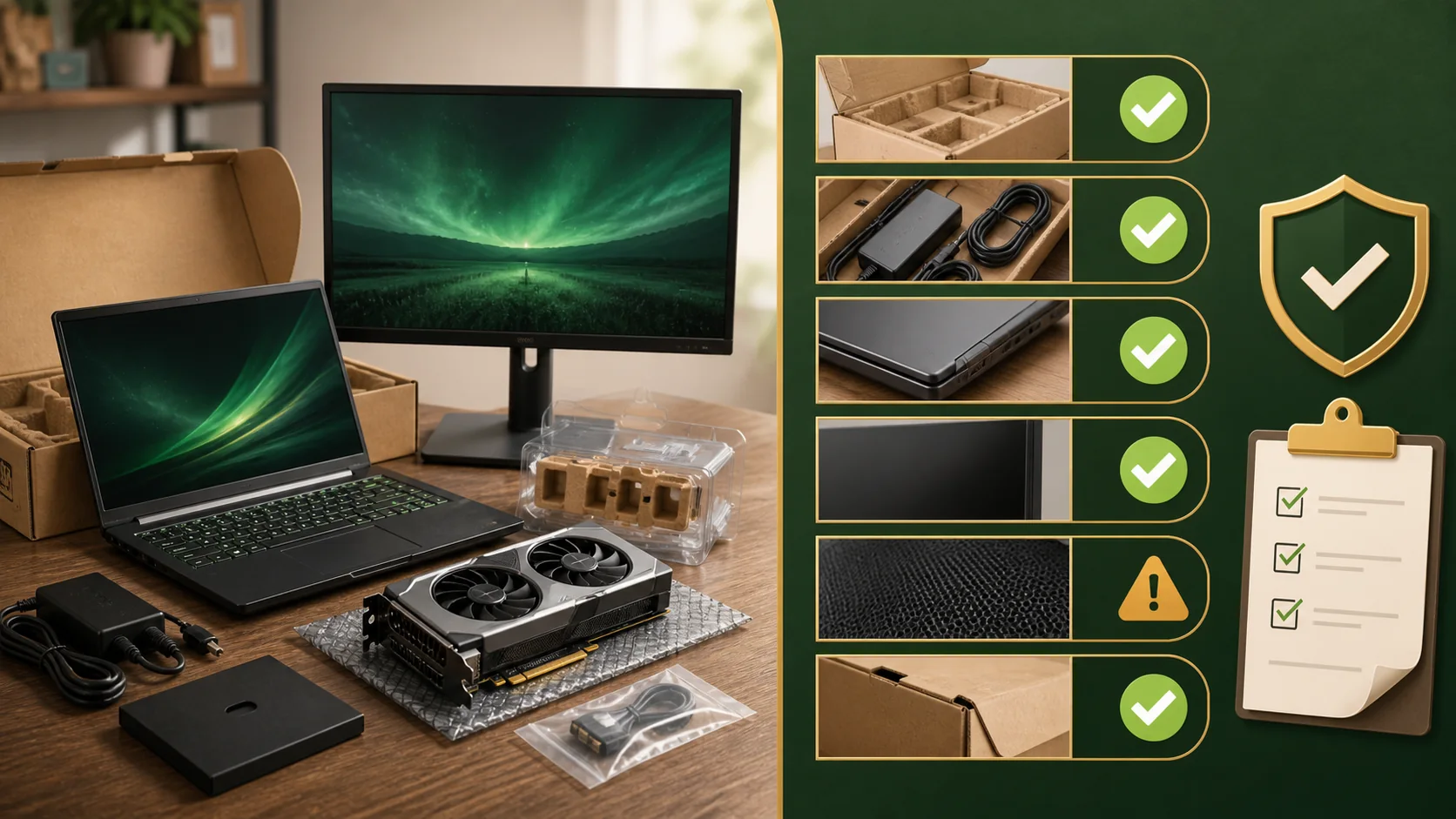
Top 3 picks at a glance
Why Items End Up In The Open Box Category
The majority of open box inventory comes from straightforward customer returns unrelated to any defect: buyer’s remorse, an incorrect purchase (wrong GPU model, wrong monitor size), a gift return, or a customer who simply changed their mind within a standard return window, all of which result in an item that’s fully functional and often in essentially new condition being returned to the retailer, who can no longer legally or by policy sell it as brand new once the original packaging has been opened.
A smaller share of open box inventory comes from display or demo units used in physical retail stores, floor models that have been handled by customers but not actually used for their intended purpose beyond demonstration, and occasionally from a retailer’s own damaged-outer-packaging inventory where the product itself is undamaged but the retail box was dented or torn during shipping and can’t be sold as new due to packaging policy rather than any issue with the actual item.
Genuinely defective returns do enter the used market, but reputable retailers generally route these through a separate refurbished or “as-is/for parts” category rather than the open box category specifically, since open box by definition implies the retailer’s own assessment found the item to be in working, sellable condition; understanding this distinction is the first step in correctly evaluating whether a specific open box listing represents good value for your situation.
Condition Grades: What Excellent, Good And Fair Actually Mean
Most major retailers use a tiered condition grading system, commonly labeled something like Excellent, Good, Fair or Satisfactory, or numbered/lettered grades, and while exact definitions vary by retailer, “Excellent” or the top tier generally indicates minimal to no visible cosmetic wear, complete original accessories and packaging, and full functional testing passed, essentially indistinguishable from new aside from the box having been opened.
“Good” or a middle tier typically indicates light cosmetic wear (minor scuffs, a slightly worn box), possibly missing some non-essential original packaging or accessories (a case sticker sheet, for example, on a prebuilt PC, or a manual that’s easily found online), but full functionality confirmed; this tier commonly represents the best value-to-discount ratio for buyers who don’t particularly care about pristine original packaging, since the discount is meaningfully larger than the top tier while functional risk remains low.
“Fair” or a lower tier generally indicates more noticeable cosmetic wear, missing accessories that might need separate replacement (a lost GPU driver bracket, a missing prebuilt PC’s included keyboard/mouse), and sometimes a shorter or absent warranty; this tier can still represent good value for a purely functional purchase where cosmetics don’t matter, such as a GPU going into a build where the card itself is hidden inside a case, but it warrants more careful reading of exactly what’s included and what the specific cosmetic issues are before buying. Table 1 summarizes the typical grade tiers and what to expect from each.
| Condition Grade | Cosmetic Condition | Typical Discount Range | Accessories/Packaging |
|---|---|---|---|
| Excellent / Like New | Minimal to no wear | 10-15% off | Complete |
| Good / Very Good | Light wear, minor scuffs | 15-22% off | Mostly complete |
| Fair / Acceptable | Noticeable wear | 22-30%+ off | May be missing items |
Realistic Savings By Product Category
GPUs and prebuilt gaming PCs typically see the more conservative end of open box discounting, commonly 10-20% off original retail price, reflecting both strong ongoing demand for these categories and retailers’ more cautious approach to grading high-value electronics, where a full functional test (including a stress test in many cases for GPUs specifically) is standard before relisting given the higher price point and higher stakes of a functional issue going unnoticed.
Monitors and displays fall in a similar range to GPUs, generally 10-20% off, though cosmetic condition matters more here than for a GPU that’s hidden inside a case, since a monitor’s screen and bezel are constantly visible; checking listing photos carefully for any mentioned dead pixels, scratches, or uneven backlighting is particularly important for this category, more so than for components that live inside a closed case.
Accessories including headsets, keyboards, mice and controllers frequently see the steepest open box discounts, sometimes 20-35% off, reflecting faster depreciation on these categories combined with hygiene-related consumer hesitancy around previously-owned items worn close to the body (headsets especially); buyers comfortable with a light cleaning of ear cushions or a keyboard’s keycaps often find this category offers the single best relative value in the open box space, and our best gaming headset deals and best keyboard and mouse deals coverage regularly features open box listings specifically for this reason.
Warranty Coverage: What To Confirm Before Buying
Warranty terms on open box items vary more than almost any other aspect of the purchase and should never be assumed; some retailers pass through the remainder of the original manufacturer’s warranty (meaning if a GPU has a 3-year manufacturer warranty and was returned 2 months after original purchase, roughly 2 years and 10 months of coverage would remain), which is the most buyer-friendly arrangement and worth specifically confirming in the listing details or by contacting the retailer directly if it’s not clearly stated.
Other retailers offer their own separate, shorter open-box-specific warranty, commonly 90 days, that supersedes or replaces the manufacturer’s original coverage terms; this is a meaningfully shorter protection window than a full manufacturer warranty and should factor into your risk assessment, particularly for higher-cost items like GPUs or prebuilt PCs where a failure outside a 90-day window without further coverage represents real financial risk compared to buying new with full multi-year coverage.
A smaller number of open box listings, particularly on third-party marketplaces rather than a retailer’s own direct open box program, are sold as-is with no warranty and sometimes no return eligibility at all; this arrangement should generally command a significantly deeper discount to be worth the added risk, and reading the specific listing’s warranty and return terms carefully, rather than assuming standard retailer policy applies, is essential before completing a purchase in this category.
How To Verify An Open Box Listing Before Buying
Read the full condition description and any listed notes about missing accessories or cosmetic issues carefully rather than just the headline discount percentage, since the specific details in a listing (a note about a missing GPU bracket, a mention of light scuffing on a prebuilt PC’s side panel) tell you exactly what to expect far more reliably than the general condition grade label alone, which can be applied somewhat inconsistently even within the same retailer’s own program.
Check whether the retailer states the item was functionally tested prior to relisting, and if a specific test process is described (a stress test for a GPU, a boot and benchmark run for a prebuilt PC), that’s a meaningfully stronger assurance than a generic “inspected” claim without further detail; retailers with a dedicated, well-established open box or renewed program (rather than a general marketplace third-party seller listing) generally provide more consistent testing and grading standards worth the modest price premium they sometimes carry over less-verified marketplace listings.
Cross-reference the open box price against current new pricing for the same item using a price-tracking tool, since the value of an open box discount is only meaningful relative to what the item currently costs new, not its original launch price; an open box listing showing a “30% off original MSRP” claim can sometimes represent a smaller actual discount, or even no discount at all, if the item’s new price has already dropped significantly since that original MSRP was set, a dynamic covered in more depth in our how GPU pricing works guide.
Open Box Versus New: When Each Makes More Sense
Open box makes the most sense for budget-conscious buyers purchasing components that will be hidden inside a case (GPUs, RAM, storage) where cosmetic condition is largely irrelevant to the buying decision, and for buyers comfortable with a shorter warranty window in exchange for meaningful savings, particularly on higher-cost items where even a 10-15% discount represents significant absolute dollar savings.
New purchases make more sense for buyers who specifically value full manufacturer warranty length with no ambiguity, for gift purchases where pristine original packaging and presentation matter, and for categories where a very deep open box discount would be needed to offset meaningfully higher risk, such as complex prebuilt systems where diagnosing a subtle issue after purchase is more involved than with a single standalone component.
A practical middle-ground approach many experienced buyers use is reserving open box shopping specifically for major purchases (GPUs, prebuilt PCs, monitors) where the absolute dollar savings are largest and therefore most worth the extra diligence of reading listing details and warranty terms carefully, while buying lower-cost accessories new when the price difference in absolute terms is small enough that the added scrutiny isn’t worth the time saved, a calculation worth making on a per-purchase basis rather than a blanket policy either way.
Where To Find Legitimate Open Box Gaming Deals
Major retailers including Amazon (Amazon Renewed and Amazon Warehouse), Best Buy (Open Box), Newegg (Open Box and Certified Refurbished), and Micro Center (Open Box, in-store primarily) all run their own dedicated open box programs with retailer-managed grading and warranty terms, generally representing the most reliable and consistent source compared to individual third-party marketplace sellers, whose grading standards and honesty can vary considerably from seller to seller.
Manufacturer-direct outlet or refurbished stores (available for some GPU brands, prebuilt PC makers, and accessory manufacturers) offer another reliable channel, often with the strongest warranty terms in the open box space since the manufacturer itself, rather than a retailer or reseller, stands behind the item, though selection is typically narrower than a large retailer’s broader open box catalog spanning multiple brands.
Our best refurbished gaming PC deals coverage tracks current open box and refurbished listings across these major channels specifically, cross-referenced against current new pricing so the actual discount percentage reflects real, current savings rather than a comparison against an outdated or inflated reference price, the same verification approach worth applying to any open box listing you’re evaluating independently.
Red Flags To Watch For In Open Box Listings
A listing with an unusually vague condition description, generic stock photography instead of actual photos of the specific item (common on some third-party marketplace listings), or a discount that seems dramatically larger than typical for that category and condition tier (per Table 1 above) all warrant extra caution and closer reading of the seller’s specific terms before buying, since an unusually steep discount sometimes reflects a genuine issue not fully disclosed in a brief listing description.
Seller reputation and review history matter more for open box purchases through a marketplace (rather than a retailer’s own direct program) than for new item purchases, since the seller’s own handling, testing rigor and honesty about condition directly determine what you’ll actually receive; checking recent reviews specifically mentioning open box or used item purchases from that seller, rather than just an overall seller rating, gives more relevant signal about what to expect.
A missing or unclear return policy on an open box listing is a meaningful red flag, since even carefully tested items occasionally have an issue that only becomes apparent during actual use, and a listing that doesn’t allow returns removes your recourse if that happens; prioritizing listings with a clearly stated, reasonable return window, even if it means paying a slightly higher price than the absolute cheapest available listing, is generally the safer approach for any open box purchase above a modest dollar amount.
Troubleshooting: What To Do If An Open Box Item Has A Problem
If an open box item arrives with an undisclosed defect or cosmetic issue not mentioned in the listing, document it with photos immediately upon opening and contact the retailer’s customer service promptly, referencing the specific listing description versus what actually arrived, since most major retailers’ standard return or exchange policies apply to this kind of discrepancy even on open box purchases, particularly within the first 14-30 days.
If a GPU or other component from an open box purchase shows signs of prior heavy use inconsistent with its stated condition grade, such as unusually worn thermal paste, excessive dust buildup, or a fan bearing that sounds different from new, this is worth documenting and raising with the retailer, since some open box categories legitimately promise a functional-test-passed standard that heavy undisclosed wear would arguably not meet even if the item technically still works.
If you’re unsure whether a specific open box listing’s warranty terms actually cover a problem you’re experiencing, contacting the retailer’s support team directly with the specific order number before assuming either full or zero coverage is worthwhile, since warranty administration for open box items sometimes involves case-by-case judgment calls that aren’t always fully captured in the general terms displayed at the time of purchase, and a direct conversation often resolves ambiguity faster than guessing based on general policy language.
Frequently asked questions
Is open box the same as refurbished?
No, open box typically means a customer returned an item in its original or near-original condition without any repair performed, while refurbished means the item was inspected, tested, and sometimes repaired by the manufacturer or a certified refurbisher before resale, often including a more thorough quality process and clearer warranty terms.
How much can I typically save buying open box gaming hardware?
Savings typically range from 10-30% off original retail price depending on the item’s condition grade and category, with GPUs and prebuilt PCs often landing on the lower end of that range (10-20%) and accessories like headsets or keyboards sometimes seeing steeper discounts (20-30%) due to faster depreciation on those categories.
Does open box come with a warranty?
Warranty coverage varies significantly by retailer and item; some open box listings retain the remainder of the original manufacturer warranty, others come with a separate, shorter retailer-provided warranty (commonly 90 days), and some are sold as-is with no warranty at all, so always confirm this specific detail before buying rather than assuming standard coverage applies.
Are open box items tested before being resold?
This varies by retailer; major retailers with dedicated open box programs generally perform at least a basic functional test and visual inspection before relisting, while smaller retailers or marketplace sellers may resell an open box return with minimal or no verification, which is why checking the specific retailer’s stated open box process matters.
Can I return an open box item if something’s wrong with it?
Most major retailers apply the same or a similar return policy to open box items as new items, though the window is sometimes shorter; always check the specific listing’s return terms before purchase, since a small number of marketplace open box listings are sold as final sale with no returns accepted.


