
Student discounts on gaming gear typically range from 5-20% off depending on the brand and category, verified through services like UNiDAYS or Student Beans using a .edu email address or alternative enrollment proof, and available across laptop makers, prebuilt PC brands, some GPU and peripheral manufacturers, and select software and subscription services. The discounts are real and stack in many cases with existing sales, but availability and depth vary enough by brand that it’s worth checking systematically rather than assuming a flat discount applies everywhere.
This guide covers which categories of gaming gear commonly offer student pricing, how verification actually works, and the specific brands and programs worth checking before a major purchase. Deals editor Rachel Osei, who tracked retail pricing and inventory data for a consumer-electronics price aggregator before covering gaming deals, compiled the discount ranges in this guide from a price-history database covering multiple retailers and years of sale cycles, cross-referenced against currently active student program terms.
As an Amazon Associate we earn from qualifying purchases at no extra cost to you. Product prices and availability are accurate as of the date shown and are subject to change.








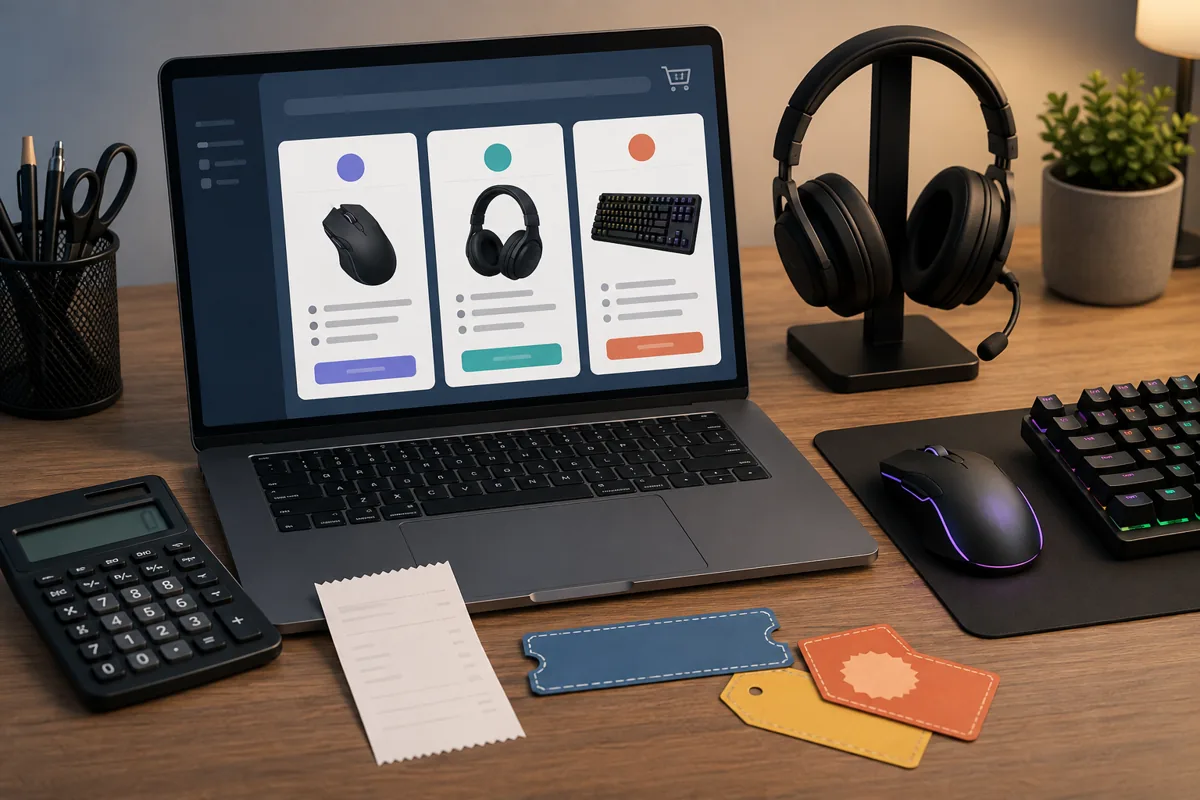
Top 3 picks at a glance
How Student Verification Actually Works
Most brands don’t build and maintain their own student verification system in-house, instead partnering with a third-party verification service, most commonly UNiDAYS or Student Beans, which specialize in confirming a person’s current student status and then issuing a discount code or unique link redeemable at the partner brand’s checkout. This is why you’ll see the same UNiDAYS or Student Beans branding across dozens of unrelated gaming and tech brands’ student discount pages rather than each brand running its own separate verification process.
The fastest verification path is a .edu email address (or the equivalent institutional domain for non-US students), which many of these services can verify near-instantly by sending a confirmation link to that address; students without an active .edu email, including some international students, recent graduates in a gap period, or students at institutions using a non-.edu domain, can generally still verify using an alternative document, commonly a current enrollment letter, a photo of a valid student ID, or a class schedule, though this document-review path takes longer, sometimes a few minutes and sometimes up to 1-2 business days depending on the service’s review queue.
Once verified, most services issue a reusable membership status (rather than a single-use code) that remains valid for a set period, commonly tied to your verified enrollment status, letting you access student pricing repeatedly across multiple partner brands without re-verifying for each individual purchase, which makes it worth completing the verification process once even if you’re not making an immediate purchase, so it’s ready when you do need it.
Laptop And Prebuilt PC Student Discounts
Major gaming laptop and prebuilt PC brands commonly offer student discounts in the 5-10% range off standard pricing, occasionally supplemented by student-exclusive bundle deals (a free accessory, extended warranty, or software bundle included at no extra cost specifically for verified students) that can add meaningfully more value than the percentage discount alone suggests when comparing total package value against a non-student purchase.
Some brands run separate, deeper student promotions during back-to-school season specifically (roughly July through September in the US), sometimes stacking an additional temporary discount on top of their standing student discount rate, making this window worth watching closely if a laptop or prebuilt purchase can be timed around it rather than made earlier in the year at the standard year-round student rate; our best back to school gaming deals coverage tracks these seasonal student-specific promotions as they go live.
Financing programs offered by some laptop and prebuilt PC brands sometimes include student-specific terms, such as deferred payment options timed around a semester schedule or a reduced or waived interest promotional period, which can matter as much as the percentage discount itself for a large purchase; checking whether a brand’s student program includes financing terms beyond just a straightforward percentage discount is worth doing before assuming the headline discount percentage is the full extent of the student-specific benefit available.
GPU, Component And Peripheral Student Pricing
Standalone GPU manufacturers offer more limited direct student discount programs compared to full laptop or prebuilt PC brands, since GPUs are frequently sold through third-party retailers and board partners rather than directly, meaning student pricing is less commonly available at the GPU-chip level itself and more commonly found through retailer-wide student promotions (some retailers offer a blanket student discount across their entire electronics catalog rather than category-specific).
Peripheral brands, including several major keyboard, mouse, and headset makers, more frequently run dedicated student discount programs through UNiDAYS or Student Beans, commonly in the 10-15% range, sometimes higher during promotional periods; this category tends to offer some of the more consistently available and worthwhile student discounts in gaming gear specifically because peripherals are typically sold direct-to-consumer through brand websites where implementing a verification-based discount program is more straightforward than through third-party retail channels.
Monitor brands vary considerably in whether they offer student-specific pricing at all, with some major display manufacturers running programs through the standard verification services and others offering no dedicated student discount, making it worth checking a specific monitor brand’s dedicated student or education page directly rather than assuming a program exists; our best gaming monitor deals and best SSD deals for gamers coverage flags which specific brands in those categories currently maintain active student programs.
Software And Subscription Student Discounts
Software and subscription services tied to gaming, including some game platform subscriptions, creative and streaming software relevant to content-creating gamers, and cloud gaming services, frequently offer some of the steepest student discounts in the entire gaming ecosystem, commonly 30-60% off standard subscription pricing, reflecting these companies’ broader strategy of building habitual, loyal usage during the student years when price sensitivity is highest and switching costs later benefit from established habit.
Music and media subscription bundles marketed partly toward students (relevant to gamers who stream while playing or use music services during sessions) similarly often include meaningful discounts, and checking whether a student subscription bundle includes services you already pay for separately can sometimes reveal a net savings even after accounting for services in the bundle you wouldn’t otherwise use.
These software and subscription discounts typically require ongoing re-verification, commonly annually, to maintain the discounted rate throughout a multi-year degree program, which is worth calendaring a reminder for, since automatic renewal at a standard, non-student rate after a verification lapses is a common and avoidable way to lose the discount without immediately noticing the price increase on a recurring subscription charge.
Stacking Student Discounts With Sales And Coupons
Whether a student discount stacks with an existing sale price varies by retailer and specific promotion; some brands explicitly design their student discount to apply on top of already-discounted sale pricing, effectively compounding the savings, while others structure the student discount as an alternative to, rather than additional to, a concurrent sale, applying whichever single discount is larger rather than both together.
Checking the specific terms displayed at checkout, where the discount is actually applied, is the most reliable way to confirm stacking behavior for a specific purchase, since general program terms pages don’t always clearly specify interaction with every possible concurrent promotion; a straightforward test is adding an item to cart during an active sale, applying the student discount code, and checking whether the final price reflects both discounts combined or just the larger single one before completing the purchase.
Seasonal sale events, covered in more detail in our seasonal sale calendar for PC gamers guide, are worth cross-referencing against student discount timing specifically, since a student discount that does stack with a major sale event like Black Friday or Cyber Monday can represent the single best combined savings opportunity of the year for a planned major purchase, worth timing deliberately rather than buying immediately when a student verification first completes.
Verifying Eligibility Without A Traditional .edu Email
International students, students at institutions that don’t use a .edu domain structure, and students using a personal rather than institutional email for most communication can generally still verify through the same UNiDAYS or Student Beans programs using alternative documentation, most commonly a photo or scan of a current, valid student ID card showing your name, institution and a current or upcoming expiration date, or an official enrollment verification letter from your institution’s registrar.
Community college, trade school and part-time enrollment students are generally eligible for the same student discount programs as traditional four-year university students, since verification services typically check current enrollment status rather than a specific institution type or full-time status threshold; students in these categories who assume they might not qualify are often pleasantly surprised that standard verification succeeds without any special process. Table 1 summarizes acceptable verification paths.
| Verification Method | Typical Speed | Best For |
|---|---|---|
| .edu email address | Instant to a few minutes | US students with institutional email |
| Student ID photo upload | A few minutes to hours | Students without .edu email |
| Enrollment verification letter | Up to 1-2 business days | International or non-standard enrollment |
| Class schedule document | A few minutes to hours | Alternative when ID/letter unavailable |
Timing A Major Purchase Around Student Discount Availability
Since student discount verification through UNiDAYS or Student Beans generally remains valid for an extended period once completed rather than needing renewal for every single purchase, there’s little downside to completing verification well before an actual planned purchase, which means the discount is simply available and ready to apply whenever the timing is right for the purchase itself, including during a seasonal sale event where combining both discounts might apply.
New academic year timing (back-to-school season) is worth watching specifically for laptop and prebuilt PC purchases, since several brands run their deepest promotional student pricing during this window rather than year-round, meaning a purchase planned for slightly later in the year at the standard student discount rate might actually cost more than waiting for or timing around this seasonal peak, depending on how time-sensitive the actual need for the hardware is.
Graduation timing is worth considering from the opposite direction: verified student status generally expires around your program’s expected completion date, so a planned purchase near graduation should be verified and completed with enough buffer before that expiration to avoid a purchase attempt failing verification simply due to timing, particularly relevant for a final-semester student planning a graduation gift purchase for themselves using student pricing before it lapses.
Comparing Student Discounts Against Other Discount Types
Student discounts generally represent a smaller percentage than a major seasonal sale event discount on the same item, meaning a student discount alone usually isn’t a reason to buy immediately rather than waiting for Black Friday, Cyber Monday or another major sale window if that timing works for your needs, unless the two discounts stack for a genuinely larger combined savings as covered earlier.
Compared to open box or refurbished pricing, covered in our open box gaming deals explained guide, student discounts on new items sometimes approach or match the savings available from a good open box listing, while offering full new-item warranty and condition, making the choice between a student-discounted new item and a similarly priced open box item mostly a matter of whether the specific open box listing’s warranty terms and condition grade meet your comfort level, rather than one option being universally better value.
Cashback and rewards programs, covered further in our how to stack coupons and cashback guide, frequently do stack with student discounts since they typically operate as a separate rebate mechanism rather than a checkout-applied discount code, meaning combining a student discount with an applicable cashback portal can add further savings on top of an already-discounted student price without the stacking conflicts sometimes seen between two checkout-level discount codes.
Common Mistakes That Cost Students Money
The most common mistake is not checking for a student discount at all before a purchase, particularly in categories like peripherals and software where discounts are commonly available but less prominently advertised than laptop and prebuilt PC student programs; a quick search for “[brand name] student discount” before checking out on any gaming purchase takes under a minute and costs nothing to check even when no program turns out to be available.
A second common mistake is letting subscription-based student discounts lapse without noticing, since annual re-verification requirements mean a forgotten renewal silently reverts a subscription to full price rather than sending a prominent warning in every case; setting a calendar reminder a few weeks before an annual re-verification deadline for any ongoing subscription discount prevents this quiet cost creep.
A third mistake is assuming a student discount automatically applies at checkout without confirming the code or verified status was actually and correctly applied before completing payment, since a failed or expired verification link sometimes allows checkout to proceed at full price without a clear error message; double-checking the final price reflects the expected discount before submitting payment, rather than assuming it worked, avoids paying full price by accident on a purchase you specifically qualified for savings on.
Troubleshooting: Verification Fails Or Discount Won’t Apply
If .edu email verification fails or the confirmation email never arrives, check spam or junk folders first, then confirm the email address was entered correctly without typos, and if it still fails, switch to the alternative document verification path (student ID or enrollment letter) rather than repeatedly retrying an email method that isn’t working, since document verification, while slower, has a more reliable success rate for edge cases the automated email system sometimes mishandles.
If a discount code generated through UNiDAYS or Student Beans returns an “invalid code” error at a brand’s checkout, check the code’s stated expiration window, since these codes are sometimes single-use or time-limited even though the underlying verified student status remains valid longer; generating a fresh code through the verification service’s portal, rather than reusing an older saved code, resolves this in most cases.
If a discount appears to apply correctly in your cart but reverts or disappears at final checkout, this is sometimes caused by an item in the cart being excluded from the specific promotion (certain clearance or already-heavily-discounted items are commonly excluded from stacking with a student discount) rather than a technical error; reviewing which specific items in a mixed cart are and aren’t eligible, visible in most checkout flows by removing items one at a time to isolate the cause, identifies the actual excluded item faster than assuming the whole discount has failed.
Frequently asked questions
Do I need a .edu email address to get student discounts on gaming gear?
Most programs require verification through a service like UNiDAYS or Student Beans, which typically accepts a .edu email or an alternative document like a current enrollment letter or student ID photo if you don’t have a .edu address, so a .edu email speeds up verification but usually isn’t the only accepted proof.
Which gaming brands offer the best student discounts?
Discount depth varies by brand and category; laptop and prebuilt PC makers commonly offer 5-10% off plus periodic student-exclusive bundle deals, while software, peripherals and some monitor brands occasionally offer steeper 10-20% student-specific discounts, so it’s worth checking each brand relevant to your planned purchase individually.
Can graduate students and community college students get student discounts too?
Yes, in nearly all cases verification services and brand programs accept any currently enrolled student regardless of degree level or institution type, including community college, trade school and graduate programs, as long as enrollment can be verified through the standard process.
Do student discounts stack with other sales or coupons?
This varies by retailer and specific promotion; some student discounts apply on top of an existing sale price for additional combined savings, while others explicitly exclude combination with other offers, so checking the specific terms of both the student discount and any concurrent sale before assuming they’ll stack is worth the extra minute.
How long does student discount verification take?
Verification through services like UNiDAYS or Student Beans is often instant when a valid .edu email is used, while document-based verification (enrollment letter, student ID) for students without a .edu address can take anywhere from a few minutes to 1-2 business days depending on the service’s current review volume.


